
Reviewed · POLITICAL & MURAL TOURS
Belfast Troubles Murals Street Art and Peace Wall Walking Tour
Belfast tells its story on brick walls. This three-hour walk brings you from modern international street art to the political murals of West Belfast, and I like its small groups of up to eight and its effort to show both communities rather than only one side. I also like the focus on present-day healing through community art. The main caution is pace: you may cover more than 6 kilometers, often briskly, while taking in a large amount of history.
The guide, Marti, is a Belfast local who brings strong personal knowledge and a clear sense of purpose to the walk. His style can be direct and information-heavy, which suits people who want a serious introduction to the Troubles but may feel demanding if you prefer a relaxed, highly conversational tour.
In This Review
- Key points at a glance
- Why Belfast’s murals are worth seeing on foot
- Starting in the Cathedral Quarter
- Shankill Road and Loyalist murals
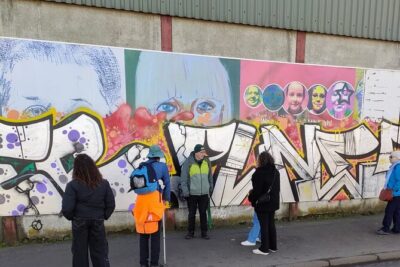
- Divis Street’s International Mural Wall
- The Peace Wall and the reality of separation
- The Bobby Sands mural in West Belfast
- Marti’s guiding style and the amount of information
- A balanced look at both sides
- Walking conditions, weather, and group size
- Is $36.11 good value?
- Who should book this Belfast walk?
- Should you book it?
- FAQ
- How long does the walking tour last?
- Where does the tour start?
- Where does the tour finish?
- What areas does the tour visit?
- How much walking is involved?
- Is the tour suitable for children?
- How many people can join the tour?
- What happens if I need to cancel?
Key points at a glance
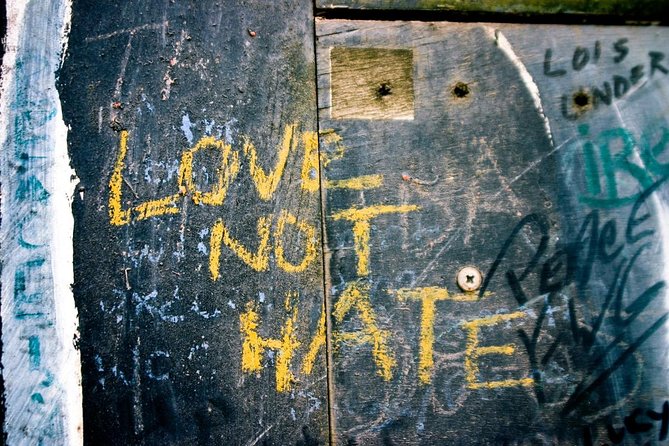
- More than political murals: You see international street art, community projects, Loyalist murals, Republican murals, and artwork tied to causes from around the world.
- A small West Belfast group: With a maximum of eight people, the walk can feel more respectful and manageable in residential areas.
- A brisk 6-kilometer-plus route: Comfortable shoes matter, and you need to keep up with the guide to hear the commentary.
- A balanced route through divided communities: Shankill Road, Divis Street, the Peace Wall, and the Bobby Sands mural help you see several viewpoints.
- History linked to the present: The tour explains not only the conflict but also the long process of recovery and community change.
- Good value for a serious introduction: At $36.11, the price is reasonable if you want three hours of guiding rather than a quick photo stop.
Why Belfast’s murals are worth seeing on foot
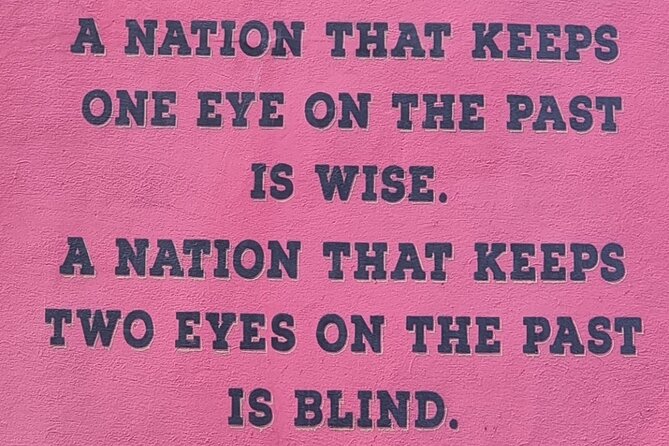
Belfast’s murals are not simply outdoor decoration. They are public statements, memorials, political symbols, community projects, and, increasingly, attempts to imagine a less divided future.
That makes a walking tour useful. From a vehicle, you can photograph a wall and move on. On foot, you have time to look at the details, hear why a mural is there, and understand how neighborhoods on opposite sides of the city have used art in different ways.
This walk begins with modern street art in and around the Cathedral Quarter before moving west into areas connected with the Troubles. That change matters. You are not presented with Belfast as a city frozen in conflict. You see the newer creative work alongside older political images and hear how the city is trying to move forward without erasing its past.
I especially like that the route includes community-led re-imaging projects. These aim to replace or supplement controversial imagery with murals that local people want to share. That gives you a more useful picture of Belfast today than a tour focused only on famous walls.
More mural and peace wall tours in Belfast:
- Belfast’s Political Mural Taxi Tour
★ 5.0 · 1,180 reviews - Belfast Troubles Tour: Walls and Bridges
★ 5.0 · 853 reviews - Famous 1.5 hour Belfast Murals Tour
★ 5.0 · 477 reviews
Starting in the Cathedral Quarter
The meeting point is on Exchange Street West in central Belfast, near the Cathedral Quarter. The first section lasts about 30 minutes and introduces the modern street-art scene that Belfast has developed in recent years.
This is a smart opening. You begin with art that is often easier to approach, then gradually move toward murals connected to painful political memories. It gives you a visual and emotional frame for the rest of the walk.
The Cathedral Quarter section also shows how Belfast’s walls can carry several kinds of messages. Some pieces are made by international artists, while others reflect local concerns. You get a sense of the city as a place where art is being used for tourism, expression, community identity, and public discussion.
Do not expect a gallery-style stroll with long pauses at every work. The route covers a lot of ground, and the guide uses the art as a starting point for a wider story. If you want to study individual pieces in detail, take your own photographs and note the places you hope to revisit later.
Shankill Road and Loyalist murals
The walk then heads toward Shankill Road, where you see Loyalist murals and local street art. This is one of the most important parts of the route because it brings you into a neighborhood whose imagery is closely tied to identity, memory, and political allegiance.
The value here is context. A mural can look stark or unfamiliar if you see it alone. With explanation, you can begin to understand how walls have marked territory, honored people, expressed loyalty, and preserved a version of local history.
The planned stop is short, around 15 minutes, but the walk passes more art along the way. You should expect commentary to continue between formal stops. Marti’s approach includes a large amount of background, reaching well beyond the best-known events of the late twentieth century.
That broad historical frame will appeal to you if you want to understand why the Troubles cannot be reduced to a simple two-sided story. It may feel like a lot during a three-hour walk, especially when dates, groups, and political changes come quickly. I would treat this experience as an introduction, not a complete course in Irish or Northern Irish history.
Divis Street’s International Mural Wall
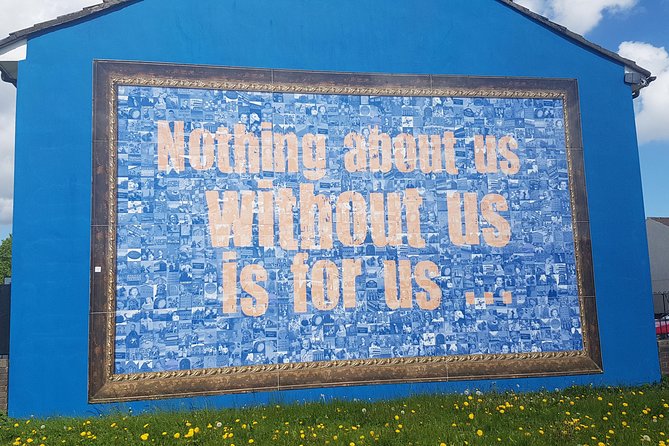
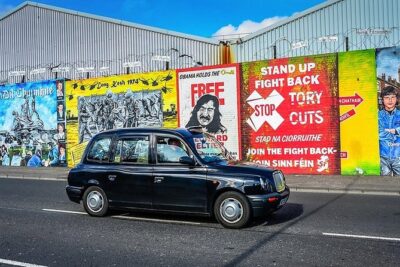
At the International Mural Wall on Divis Street, the focus shifts from local political identity to causes from around the world. This section lasts about 15 minutes and adds welcome variety to the route.
The wall helps show that Belfast’s mural tradition is not limited to local division. Political art can also connect a neighborhood with international struggles and movements. That wider view makes the city’s street art easier to place within a global tradition of public protest and solidarity.
For me, this is one of the route’s useful contrasts. You see how a wall can speak inwardly to a local community, then outwardly to people and causes far beyond Northern Ireland. It also prevents the tour from becoming a procession of conflict sites with no visual change.
More street art tours in Belfast:
- Belfast Music and Street Art Small Group Guided Experience
★ 4.5 · 62 reviews
The Peace Wall and the reality of separation
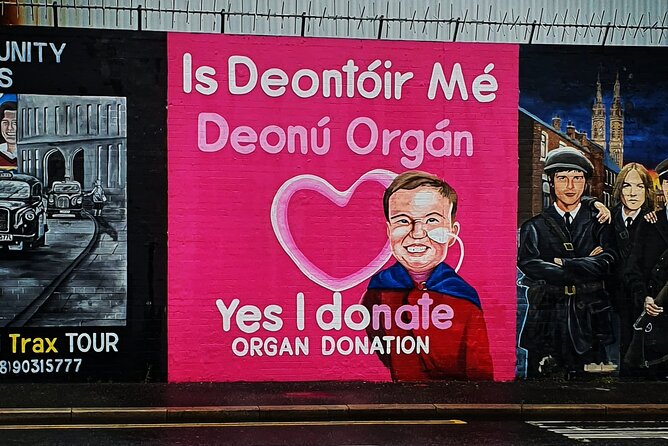
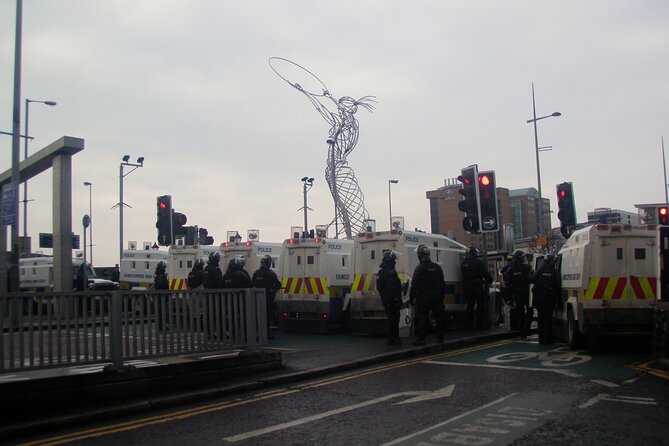
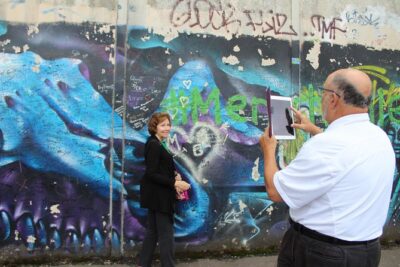
The Peace Wall is one of the central stops. The visit itself is listed at around 10 minutes, with no admission fee included because this is a public urban site rather than a ticketed attraction.
The wall separates communities that remain physically close but historically divided. Seeing it in person can be sobering. The structure is not an abstract symbol in a museum display. It is part of the city’s everyday streets, and the walk gives you a chance to consider what peace looks like when separation still exists.
The guide also discusses the work needed to heal after generations of conflict. One idea repeated throughout the experience is that trauma can take three generations to work through. That helps explain why peace is not just an agreement signed by political leaders. It is also a slow process involving families, neighborhoods, memory, trust, and the hopes people have for those growing up now.
You should be prepared for serious subject matter here. This is not a light sightseeing walk, and the route may prompt difficult questions. A respectful attitude matters, particularly because you are walking through residential communities rather than a purpose-built historical attraction.
The Bobby Sands mural in West Belfast
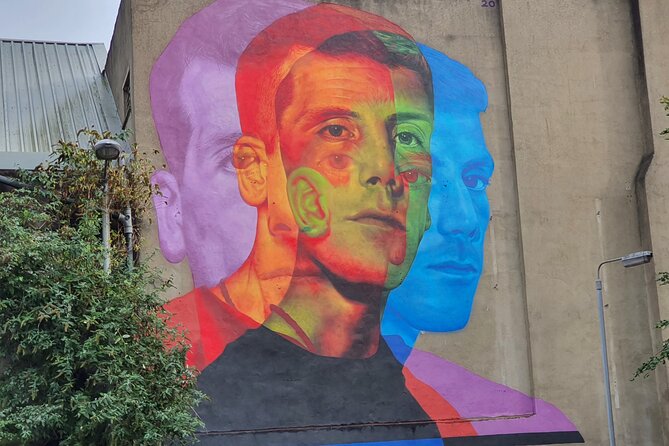
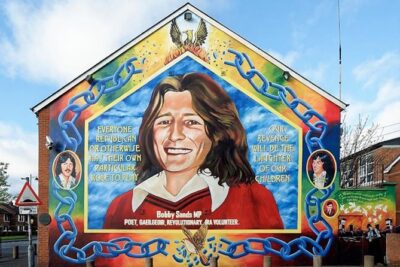
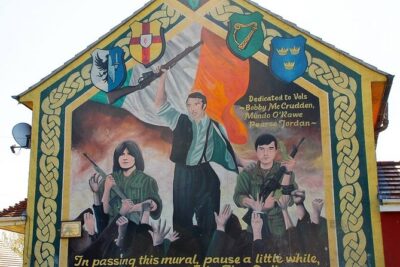
The Bobby Sands mural is the best-known Republican image on the route. The stop lasts about five minutes, but its importance is much greater than the short pause suggests.
The mural is among the most photographed in Republican West Belfast and is tied to Bobby Sands, the Irish republican hunger striker and political figure. You receive background on the image and its place within the wider conflict, along with the competing identities that shaped Belfast.
A short stop works here because the mural is visually direct, while the surrounding discussion supplies the needed context. Still, do not expect every detail of the Troubles to be resolved at one wall. Three hours can only introduce a subject this complex.
The route continues through West Belfast and eventually returns to central Belfast, passing more political murals and street art. The final destination is Kelly’s Cellars on Bank Street, though you can also continue a short distance toward City Hall and the community center at 2 Royal Avenue.
Marti’s guiding style and the amount of information
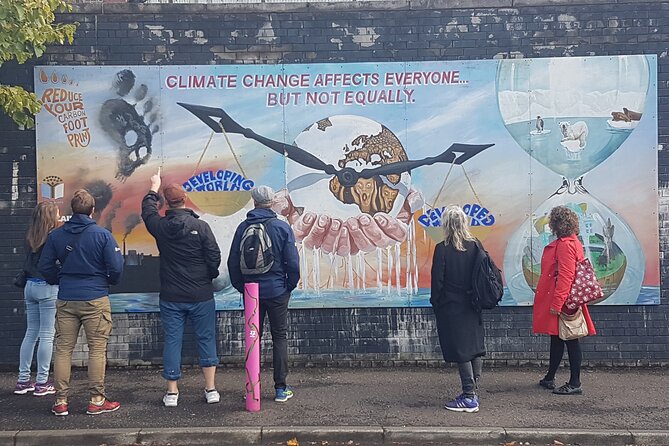
Marti is clearly the central character of this experience. He has a strong command of Belfast’s past and present, speaks clearly without a microphone, and uses personal knowledge to connect the murals with life in the city.
His best quality is commitment. He does not offer a thin list of dates and photo opportunities. He tries to explain why the conflict developed, how ordinary people were affected, and how communities are working toward a different future.
The tradeoff is presentation style. Marti can ask direct questions and challenge the group to think about what it already knows. Some people may find that engaging. Others may find it awkward or feel that questions are not always handled gently.
You should also keep your attention on him while walking. He moves quickly and does not use a microphone, so falling behind can mean missing part of the explanation. The small group helps, but this is still a moving history lesson rather than a slow, stop-and-start tour.
The information load is another consideration. The walk can reach back many centuries before concentrating on the Troubles and the current healing process. I would recommend reading a short introduction to Northern Ireland before arriving if you want to follow the names, dates, and political terms more easily.
A balanced look at both sides
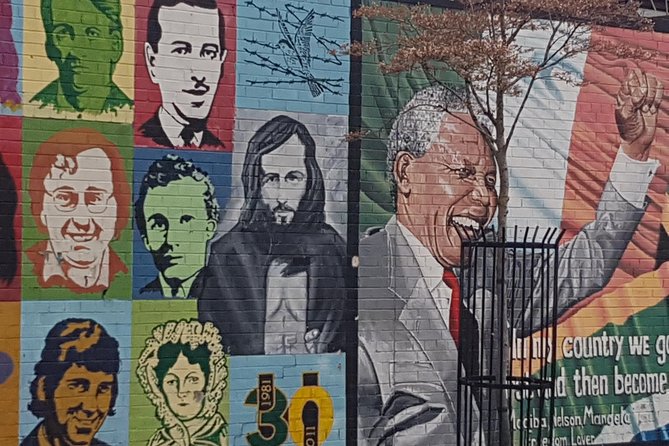
One of the strongest reasons to choose this walk is its attempt to visit both Loyalist and Republican areas. The route does not stay on one side of the story, and the guide presents Belfast as a city shaped by competing identities and shared suffering.
That does not mean every moment will feel perfectly neutral to every person. A guide’s choice of examples, tone, and personal interpretation always affects a historical tour. Still, the route itself is broad, and the emphasis on peace and future generations gives the experience a clear purpose beyond political argument.
I like the way the street art provides a practical anchor. You are not asked to absorb history in a classroom. You look at a wall, then connect it to a neighborhood, a memory, or a current community project.
The tour is also useful for correcting the idea that Belfast is only a city of old divisions. You see evidence of unresolved tension, but you also hear about new projects and changing attitudes. That mix of honesty and hope is more valuable than a polished story that pretends everything has been settled.
Walking conditions, weather, and group size
Plan for a serious walk. One detailed account put the distance at slightly more than 6 kilometers over three hours, and the route description makes clear that you will be on your feet for most of the experience.
Wear comfortable walking shoes. You need enough stamina to keep moving, stand for explanations, and remain attentive outdoors. The tour requires moderate physical fitness, and the brisk pace may not suit anyone who needs frequent rests.
Belfast weather can change quickly. Rain and cold are possible, so bring suitable clothing. Sunglasses may be useful in strong sunshine, and sunscreen makes sense in summer. There are no stated health restrictions, but you should judge your own ability to manage a long urban walk.
A maximum of eight people is a real advantage. It keeps the group from overwhelming the neighborhoods and makes it easier to hear the guide. It also gives the experience a more personal feel than a large coach excursion.
Is $36.11 good value?
At $36.11 per person, the tour is fairly priced for about three hours with a local guide and a route that covers several parts of Belfast. You are paying for interpretation, not entry tickets. The murals, Peace Wall, and public streets do not require paid admission.
The value is strongest if you want serious background and a local point of view. A short taxi ride between famous murals might cost less per person in a group, but it would not give you the same connected explanation or the experience of walking through the neighborhoods.
The value is weaker if you want a gentle art walk or a quick overview. You may find the pace fast, and the amount of information can be intense. Shopping and restaurant discounts are provided, but I would regard them as a small extra rather than a reason to book.
Free cancellation is available up to 24 hours before the start time. Cancellations within 24 hours are not refunded, so keep that deadline in mind when fixing your Belfast plans.
Who should book this Belfast walk?
I would choose this experience if you want to understand the Troubles through places, walls, and community voices. It suits adults who are comfortable with difficult history, long walks, and a guide who takes the subject seriously.
It is especially useful early in a Belfast visit. The route can give you a framework for later visits to museums, political sites, or neighborhoods you encounter on your own.
It is not suitable for anyone under 18, and the description specifically presents it as an adults-only activity. You should also think twice if you dislike direct discussion, prefer a slow pace, or need a tour with frequent seating.
Should you book it?
Book it if your goal is a thoughtful introduction to Belfast’s past, present, and hopes for the future. The mix of Cathedral Quarter street art, Shankill Road murals, Divis Street, the Peace Wall, and Bobby Sands mural gives you much more than a single famous photo stop.
I would book with three conditions: wear good shoes, bring rain protection, and arrive ready to listen for three busy hours. Marti’s style is not polished into a soft package, but it is personal, serious, and full of detail. If you want Belfast explained through the walls of the city itself, this is a strong choice.
FAQ
How long does the walking tour last?
The tour lasts approximately three hours, with the route described as taking about two and a half to three hours.
Where does the tour start?
The tour starts at Exchange Street West, Exchange Street West, Belfast BT1, United Kingdom.
Where does the tour finish?
The main finish is at Kelly’s Cellars, at 32 Bank Street, Belfast BT1 1DA. You can also continue a short walk toward City Hall and finish at 2 Royal Avenue in a local community center.
What areas does the tour visit?
The route includes the Cathedral Quarter, Shankill Road, Divis Street, the Peace Wall, and the Bobby Sands mural in West Belfast. It also passes additional street art and political murals before returning to the city center.
How much walking is involved?
You should expect a brisk urban walk of more than 6 kilometers over three hours. A moderate level of physical fitness and comfortable shoes are recommended.
Is the tour suitable for children?
No. The activity is listed as adults only and is not suitable for anyone under 18.
How many people can join the tour?
The maximum group size is eight people.
What happens if I need to cancel?
You can cancel at least 24 hours before the start time for a full refund. Cancellations or changes made within 24 hours are not refunded or accepted.
More Walking Tours in Belfast
- A History of Terror – Belfast City Centre Walking Tour
★ 5.0 · 2,883 reviews - Belfast Political Tour-Conflicting Stories Walking Tour
★ 4.5 · 459 reviews - Best of Belfast Walking Tour
★ 5.0 · 399 reviews - Belfast Eclectic Walking City Center Experience, The Marti Way
★ 5.0 · 348 reviews
Just added around Belfast
- Belfast City Airport (BHD) to Belfast Accommodation – Arrival Private Transfer★ 5.0 · 3 reviews
- Belfast history of terror & mural 1 hr express private taxi tour★ 5.0 · 3 reviews
- Game of Thrones scene location inc Giants causeway from Belfast★ 5.0 · 3 reviews
- Experience the Antrim Coast and the Land of Giants – Private Tour★ 5.0 · 3 reviews
- Belfast Private Walking Tour with a Local★ 3.0 · 3 reviews
- Giants Causeway Tour From Belfast including Game of thrones sites★ 5.0 · 3 reviews
- Belfast to Dublin Transfer★ 5.0 · 3 reviews
- Private Coast Tour in Belfast★ 5.0 · 3 reviews
Political & Mural Tours, compared.

Belfast Political Tour-Conflicting Stories Walking Tour
Read our review →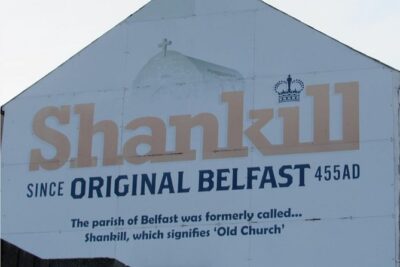
2 Hour Private Belfast Taxi Cab Tour of Troubles & Peace walls
Read our review →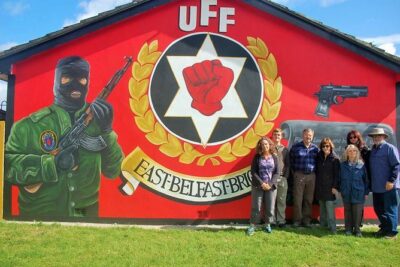
2 hours Belfast Original Drivers The Troubles Black Taxi Tour
Read our review →Browse the lists this tour appears in