
Reviewed · POLITICAL & MURAL TOURS
Belfast Political Tour-Conflicting Stories Walking Tour
Two sides meet at one wall. This three-hour walk through West Belfast brings you from the Falls Road to the Shankill Road, using murals, memorials, and personal stories to explain Belfast’s political conflict. I like the two-guide format, which gives you Republican and Loyalist viewpoints, and I like the focus on places where events actually happened. The main drawback is that this is a full outdoor walk, often beside busy roads, and the quality can depend on the guide assigned that day.
You pay about $36.05 per person for a small-group experience capped at 20 people. That is fair value for three hours with local guides and ex-political prisoners, but you should come ready for difficult stories, open disagreement, and a few moments that may challenge your own assumptions.
In This Review
- Key points to know before you book
- Why this Belfast walk is different
- Starting at Divis Tower and entering West Belfast
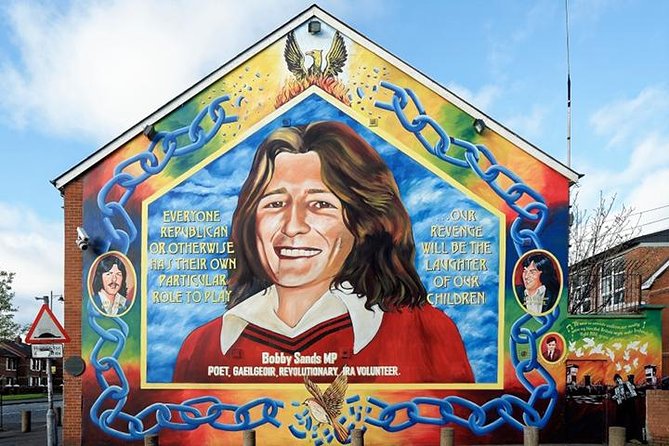
- Bobby Sands mural and the Nationalist side
- Crossing the peace wall
- Shankill Road and the Loyalist account
- What the conflicting stories reveal
- Walking conditions, group size, and practical comfort
- Is $36.05 good value?
- Who should book this experience?
- Should you book the Belfast Political Tour?
- FAQ
- How long is the Belfast Political Tour?
- How much does the tour cost?
- Where does the tour start?
- Where does the tour finish?
- Does the tour visit both sides of the peace wall?
- Which places are included in the Falls Road section?
- Which places are included on Shankill Road?
- Is the tour suitable for most people?
Key points to know before you book
- Two perspectives in one walk: You hear from guides connected to both the Republican and Loyalist sides of the conflict.
- The peace wall is still part of daily life: Gates between the Falls and Shankill areas may still close at night, making the division feel current rather than purely historical.
- Murals are only the starting point: The walk adds memorial gardens, bombing sites, volunteer memorials, and personal accounts.
- Allow the full three hours: The route covers two sections of about 90 minutes each, with plenty of standing and listening.
- Wear warmer clothing than you expect: Wind along the wall and open streets can make Belfast feel cold, even on a bright day.
- The route ends away from the start: You finish on Lower Shankill Road, about eight minutes from the starting point and roughly 15 minutes from central Belfast.
Why this Belfast walk is different
Many Belfast sightseeing tours show you political murals from the outside. This one tries to explain the people and memories behind them. You begin near Divis Tower, move through the Falls area, cross the political divide, and finish on Shankill Road.
The key feature is the pairing of guides. One guide explains the conflict from a Republican or Nationalist viewpoint. The other presents a Loyalist or Unionist view. These are not polished museum lectures. The guides speak about growing up during the Troubles, losing friends, living with fear, and trying to make peace afterward.
That personal approach is the reason this tour can stay with you. It also makes the walk less tidy. You will hear views you may find uncomfortable. You may hear a guide defend the actions of his own side while describing the suffering caused by the other. The title is accurate: the stories conflict, and the tour does not try to flatten them into one easy answer.
The strongest guides, including Paul, Ian, Jack, and Mark on different departures, have been praised for answering questions openly and speaking from direct experience. Guide names and pairings can change, so you should not book expecting a particular person. The format matters more than the names.
More mural and peace wall tours in Belfast:
- Belfast’s Political Mural Taxi Tour
★ 5.0 · 1,180 reviews - Belfast Troubles Tour: Walls and Bridges
★ 5.0 · 853 reviews - Famous 1.5 hour Belfast Murals Tour
★ 5.0 · 477 reviews
Starting at Divis Tower and entering West Belfast
The meeting point is Divis Tower in Belfast, BT12 4QA. From here, the first half takes you through the Falls area, a Nationalist part of West Belfast. This section lasts about 90 minutes and includes several major political murals and memorials.
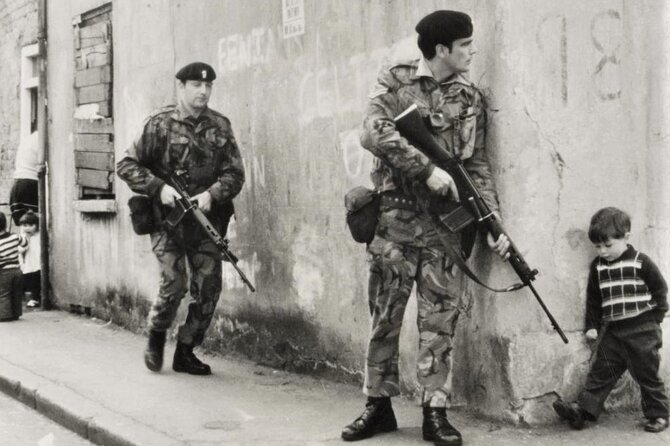
The route is not built around grand viewpoints or comfort stops. You walk city streets, pause at walls and memorials, and listen while the guide explains what happened there. That setting matters. You are not hearing about Belfast from a distant classroom. You are standing in neighborhoods still marked by the conflict.
The pace is described as moderate, but remember that the time adds up. You will walk between stops, then stand while the guide speaks. Some people find the route easy because there are frequent pauses. Others focus less on the distance and more on the weather, traffic noise, and long periods outside.
If you have trouble hearing in noisy places, stay close to the guide and ask to be positioned where you can hear clearly. One poor experience involved a muffled microphone, traffic, and a group standing close to a busy road. That appears to be an exception rather than the usual pattern, but it is a useful practical warning.
Bobby Sands mural and the Nationalist side
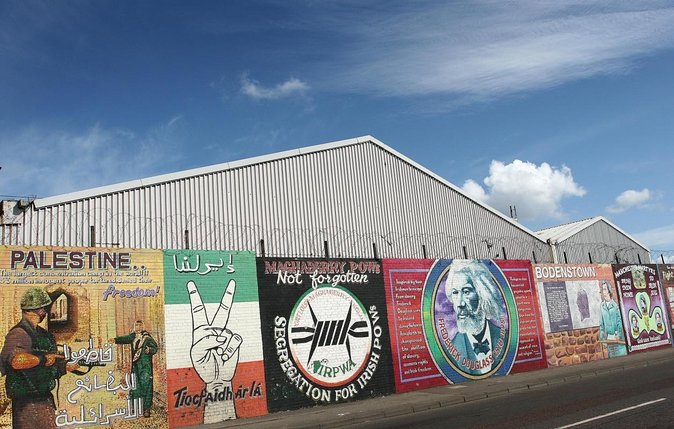
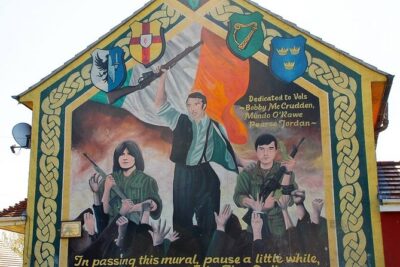
The first major stop is the Bobby Sands mural. It is part of a wider look at murals in the Falls area, including the International Wall, the D Company memorial garden, and Bombay Street.
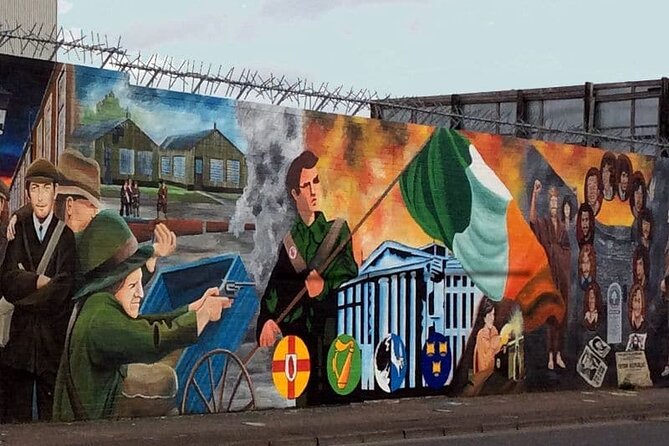
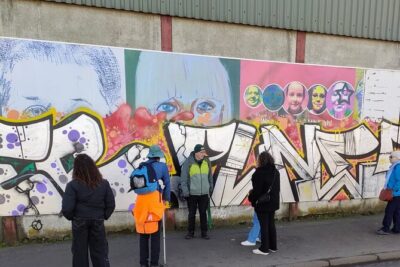
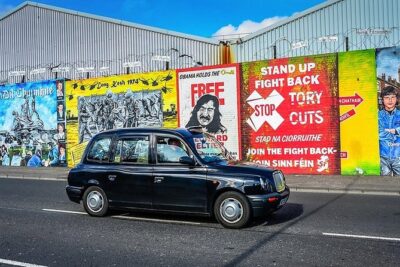
These sites help explain how public art became a political tool. Murals honor dead volunteers, express support for political causes, mark community identity, and remember people who were killed. They are not just colorful walls for photographs. Their meaning depends on names, dates, symbols, and the stories attached to them.
The Bobby Sands mural is especially important because Sands became an international symbol of the Republican movement. Your guide explains the site through a personal Republican lens, then places it within the larger story of the Troubles. This can be one of the most powerful parts of the walk, but it may also feel one-sided if you expect a neutral academic lecture.
Jack has been praised for giving a clear account of the conflict, including dates and significant people, while also explaining how he saw events himself. Another guide may take a different approach. The personal nature of the tour is its strength, but it means the amount of broad political background can vary.
At the International Wall, you may see messages and murals tied to struggles beyond Northern Ireland. The point is not simply to count murals. You are shown how local politics connected with wider ideas about nationalism, civil rights, colonialism, and armed resistance.
Bombay Street and the D Company memorial garden bring the story closer to ordinary homes and local memory. These places show that violence was not confined to politicians or paramilitary leaders. It reached streets, families, childhood friendships, and the routines of daily life.
Crossing the peace wall
The walk then takes you to the peace wall between the Falls and Shankill districts. Calling it a peace wall can sound hopeful, but the structure also represents separation. It was built to reduce contact and violence between communities, yet its continued presence shows that trust remains incomplete.
One detail worth noticing is that gates in the wall may still close at night, reportedly around 8 p.m. That fact changes the way you see the wall. It is not only a historical marker. It can still shape how people move through the area.
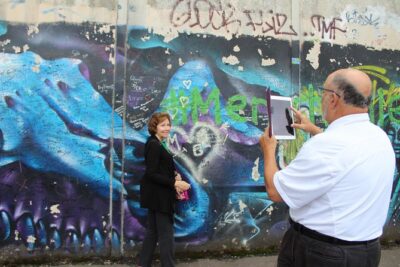
You may also have a chance to sign the wall, so bring a pen or marker if that is something you would like to do. This is optional, and the walk is more than a photo stop. The guide uses the wall to discuss security, segregation, memory, and the uneasy work of peace.
Do not expect a neat message that the wall should simply come down tomorrow. The tour presents the continuing distrust between the two communities, and you may leave with more questions than answers. That is part of the value. Belfast’s peace process is easier to understand when you see that political agreements do not instantly erase personal loss or neighborhood fear.
More walking tours in Belfast:
- A History of Terror – Belfast City Centre Walking Tour
★ 5.0 · 2,883 reviews - Best of Belfast Walking Tour
★ 5.0 · 399 reviews - Belfast Eclectic Walking City Center Experience, The Marti Way
★ 5.0 · 348 reviews - Belfast Troubles Murals Street Art and Peace Wall Walking Tour
★ 5.0 · 163 reviews
Shankill Road and the Loyalist account
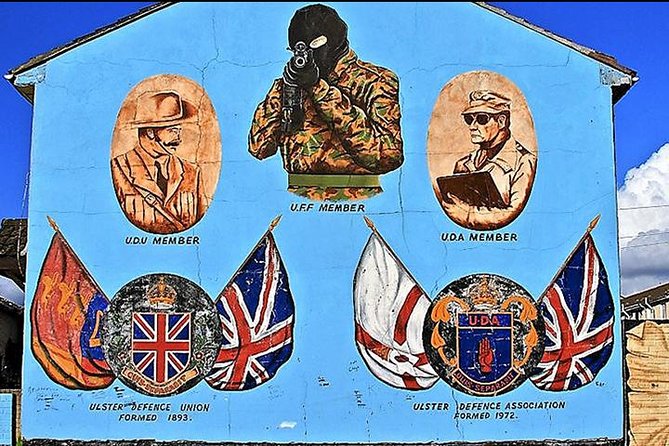
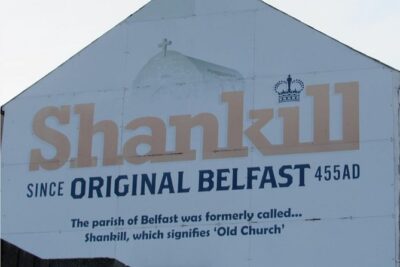
The second 90-minute section takes place on Shankill Road, a Loyalist area. Here, your guide explains the conflict from a Unionist or Loyalist perspective and points out murals, memorials, and sites connected to attacks.
Stops include the Shankill Memorial Garden, the Bayardo bombing site, a UVF memorial, the former Frizzells Fish Shop bombing site, and the Somme Memorial. The subjects are painful. You hear about people who were killed, including civilians, and learn how the violence affected families and local communities.
This section can feel different from the Falls Road portion. The Falls side often gives more space to Republican political history and the lives of volunteers. The Shankill side may focus more directly on civilian deaths, local defense, and the loss of friends and neighbors. The contrast is useful, though some people have found the second half less structured than the first.
Mark has been praised for explaining how his own life was affected and how childhood friends, both Catholic and Protestant, were lost during the conflict. That kind of account helps move the subject away from slogans. It shows how identity and politics became personal, often before people were old enough to understand the arguments.
You should not expect both guides to use the same language or offer identical levels of historical detail. One may give you a stronger timeline. Another may rely more on family memories and specific incidents. Ask questions respectfully, and remember that you are hearing lived political positions, not a final ruling on who was right.
What the conflicting stories reveal
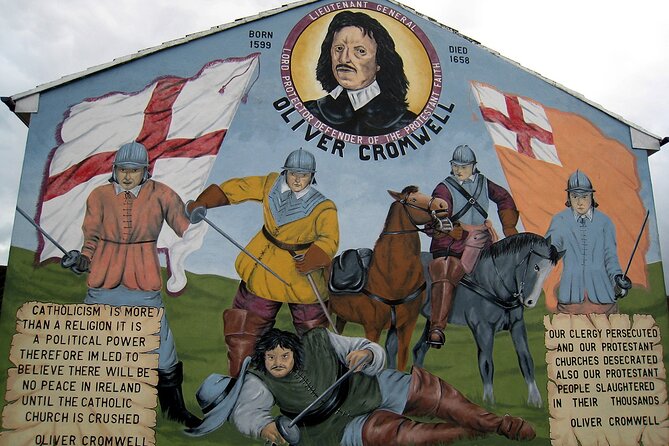
The tour’s real subject is not simply the Troubles. It is the way communities remember the same decades differently.
A Republican guide may describe state discrimination, British rule, civil rights, internment, and the reasons some people supported armed resistance. A Loyalist guide may emphasize attacks on Protestant neighborhoods, fear of a united Ireland, loyalty to Britain, and the need to protect local families.
You may disagree with parts of what you hear. That does not make the walk unsuccessful. In fact, the strongest departures leave you thinking about the difference between explaining an action and excusing it. Several of the guides have expressed a commitment to peace after describing terrible events, which gives the conversation a forward-looking edge without pretending that the past is settled.
The walk also helps you understand why the terms Catholic and Protestant do not tell the whole story. The political divide is often better described as Nationalist and Unionist, or Republican and Loyalist, though religion and community identity remain closely linked. The murals and memorials make these labels visible, while the guides explain how they were lived.
This is not a tour for collecting cheerful holiday anecdotes. It can be emotional, confronting, and at times politically sharp. If you listen with patience, you get something a standard sightseeing route rarely provides: a clearer sense of why peace can exist alongside locked gates, separate neighborhoods, and continuing distrust.
Walking conditions, group size, and practical comfort
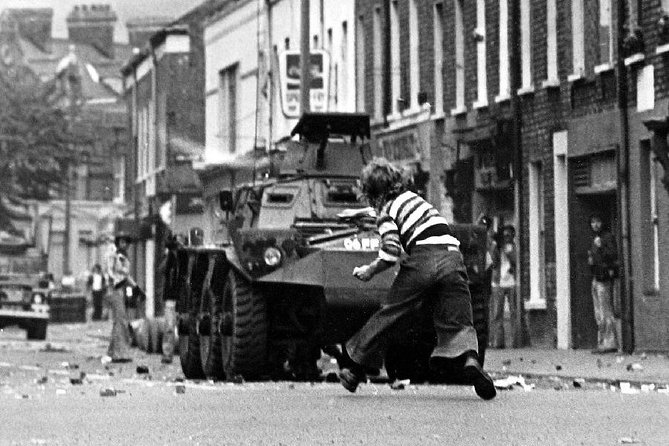
The tour lasts about three hours and has a maximum group size of 20. That is small enough for questions, though a group of 20 can still spread out on narrow sidewalks or noisy streets.
There are no major hills mentioned, and the walk is often broken into short stops. Still, wear comfortable footwear. You cover both the Falls and Shankill areas on foot, and the full distance is greater than a short mural stroll.
Dress in layers and bring water. The route is outside for the entire experience, and the open areas near the peace wall can be windy. Even on a sunny day, you may feel colder than expected. A light snack is sensible, since the walk can run for several hours with only a comfort break during one section.
The route ends at 154 Shankill Road, BT13 2BE. From there, you are about eight minutes on foot from the starting point and about 15 minutes from central Belfast. Your guide can help with directions or arrange a taxi if needed.
The tour is offered in English and uses a mobile ticket. Service animals are allowed, it is near public transportation, and most people can participate. If you need specific help with hearing, walking, or positioning within the group, contact the provider before booking rather than assuming the street setting will suit you.
Is $36.05 good value?
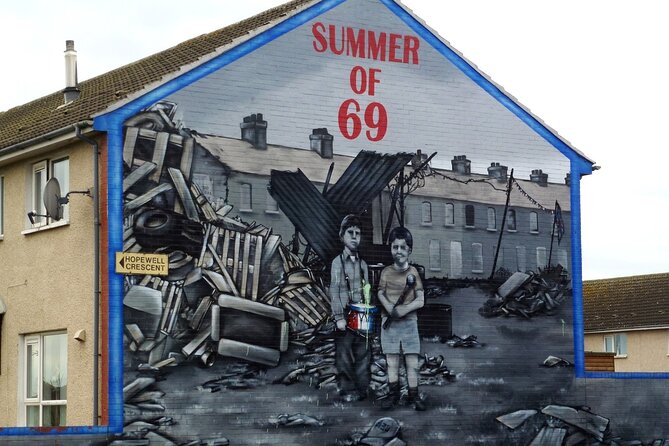
At about $36.05 per person, this is not the cheapest way to see Belfast’s murals. You can walk through parts of West Belfast independently for little or no cost. But doing so will not give you the same access to personal accounts, detailed memorial stories, or a guide from each side of the divide.
The value depends on what you want. If you only need photographs of murals, save your money and explore on your own. If you want context, names, dates, and the voices of people who lived through the conflict, three hours and two local guides make the price reasonable.
The tour is also a useful alternative to a black cab tour if your priority is hearing two opposing viewpoints. A cab route can cover more ground with less walking, while this experience gives you time at specific sites and lets you meet guides with direct political experience.
The 4.6 rating from 460 reviews and 93 percent recommendation figure suggest that most departures deliver a strong experience. Still, the occasional complaint matters. One tour was badly affected by poor sound and traffic. Another had to be refunded when the second guide failed to arrive and no replacement could be arranged. The provider acknowledged that failure, so you should see these as service risks rather than part of the planned experience.
Who should book this experience?
I would recommend this tour to you if you want to understand Belfast beyond the city center, enjoy serious walking tours, and can listen to political views without demanding a single approved version of events.
It suits first-time visitors who know little about the Troubles, because the murals and memorials give the history a clear physical setting. It also suits people who have read about Northern Ireland but want to understand how the conflict affected streets and families.
You may prefer another option if you want a quiet, neutral presentation, have difficulty walking for three hours, or dislike emotionally heavy subjects. This is not a polished museum experience. The guides speak personally, and the stories can be blunt.
Book at least a few weeks ahead if possible. The experience is booked an average of 31 days in advance, which suggests that popular dates can fill. You can cancel for a full refund up to 24 hours before the start time. If bad weather cancels the walk, you are offered another date or a full refund.
Should you book the Belfast Political Tour?
Yes, if you want the human story behind Belfast’s murals and are willing to hear two accounts that do not always agree. The Republican and Loyalist pairing is the main reason to choose this walk, and the visits to Bobby Sands, Bombay Street, Shankill memorials, and bombing sites give the history a strong sense of place.
Go prepared: wear warm layers, bring water, stay near the guide, and leave room in your thinking for complexity. You may not leave with a tidy answer, but you should leave with a better understanding of why the peace wall still matters.
FAQ
How long is the Belfast Political Tour?
The tour lasts approximately three hours.
How much does the tour cost?
The listed price is $36.05 per person.
Where does the tour start?
It starts at Divis Tower, Belfast BT12 4QA, UK.
Where does the tour finish?
It finishes at 154 Shankill Road, Belfast BT13 2BE, UK, in the Lower Shankill area.
Does the tour visit both sides of the peace wall?
Yes. The route covers the Falls area and Shankill Road, with stops at locations along the peace wall.
Which places are included in the Falls Road section?
The Falls section includes the Bobby Sands mural, the International Wall, the D Company memorial garden, and Bombay Street.
Which places are included on Shankill Road?
The Shankill section includes the Shankill Memorial Garden, Bayardo bombing site, UVF memorial, Frizzells Fish Shop bombing site, and Somme Memorial.
Is the tour suitable for most people?
Most people can participate, and service animals are allowed. It is a three-hour outdoor walking tour, so comfortable shoes and suitable clothing are important.
Just added around Belfast
- Belfast City Airport (BHD) to Belfast Accommodation – Arrival Private Transfer★ 5.0 · 3 reviews
- Game of Thrones scene location inc Giants causeway from Belfast★ 5.0 · 3 reviews
- Belfast history of terror & mural 1 hr express private taxi tour★ 5.0 · 3 reviews
- Belfast Private Walking Tour with a Local★ 3.0 · 3 reviews
- Experience the Antrim Coast and the Land of Giants – Private Tour★ 5.0 · 3 reviews
- Private Coast Tour in Belfast★ 5.0 · 3 reviews
- Giants Causeway Tour From Belfast including Game of thrones sites★ 5.0 · 3 reviews
- Belfast to Dublin Transfer★ 5.0 · 3 reviews
Political & Mural Tours, compared.
2 Hour Private Belfast Taxi Cab Tour of Troubles & Peace walls
Read our review →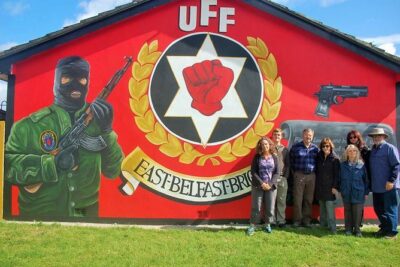
2 hours Belfast Original Drivers The Troubles Black Taxi Tour
Read our review →
Private Political History & Murals Tour Belfast
Read our review →Browse the lists this tour appears in