
Reviewed · HISTORICAL TOURS
A History of Terror – Belfast City Centre Walking Tour
Belfast’s past is never far away. This 2.5-hour city-centre walk links familiar streets with the people and events that shaped Northern Ireland during The Troubles. I like the route’s clear structure, moving from City Hall through the shopping district and Cathedral Quarter to the River Lagan. I also like the effort to present both political viewpoints without turning the tour into a partisan speech.
The main consideration is the subject matter. You will visit places connected with bombings, deaths, policing, and fear, so this is not light sightseeing. Much of the tour involves standing and listening rather than walking, and poor weather can make those pauses uncomfortable.
In This Review
- Key points to know before booking
- Why this Belfast tour matters
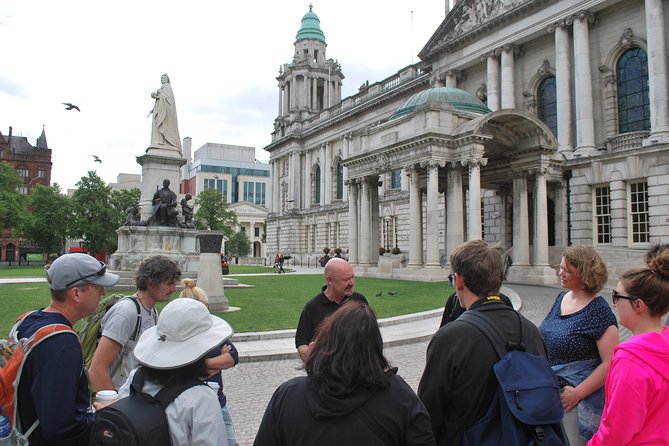
- Starting at Belfast City Hall
- Donegall Place and the Ring of Steel
- Castle Lane and the reality of daily fear
- The Spirit of Belfast and the events of 1971
- The Cathedral Quarter, from violence to peace
- Ann Street and policing during The Troubles
- Finishing beside the River Lagan
- How much walking is involved?
- The guide makes or breaks the experience
- Is $36.06 good value?
- Who should book this walking tour?
- Should you book A History of Terror?
- FAQ
- Where does the Belfast walking tour start?
- What time does the tour begin?
- Where does the tour end?
- How long does the tour last?
- How far do you walk?
- Is the route difficult?
- What language is the tour offered in?
- What happens if the weather is poor?
Key points to know before booking
- The tour begins at Belfast City Hall at 10:30 a.m. and ends near the Beacon of Hope beside the River Lagan.
- The route covers about 1.5 miles on flat city streets, with no hills or steps, though comfortable shoes still make sense.
- The focus is The Troubles, explained through political context, local stories, bomb attacks, policing, and the peace process.
- Local guides make the difference, with guides such as James, Anne, Mylie, Róisín, Rory, Roisin, and Chris praised for clear, personal storytelling.
- Headsets are supplied, which matters in a group of up to 25 people, especially on busy streets.
- The tour costs about $36.06 per person, a fair price if you want serious historical context rather than a quick introduction to Belfast.
Why this Belfast tour matters
Belfast is easy to read as a pleasant Northern Irish city of cafés, shops, pubs, murals, and public art. That surface is real, but it tells only part of the story. On this walk, ordinary streets become evidence of a much harder past.
The tour deals with the relationship between Britain and Ireland, the division between unionist and nationalist communities, and the events that led to The Troubles in the late 1960s. It also explains how violence spread, how Belfast was policed, and how the peace agreement changed daily life.
I value that the tour does not treat The Troubles as a simple argument between good and bad sides. The best guides explain the facts, define the political terms, and give names and personal stories to people affected by violence. That approach helps you form your own view instead of handing you a ready-made verdict.
The strongest feedback has focused on the guides. James is praised for his warmth, humor, and command of the subject. Mylie has been singled out for presenting Belfast’s past alongside its present. Anne brings personal memories of growing up during the conflict, while Róisín is praised for her emotional storytelling. Chris and Rory are also noted for explaining the period from direct experience.
Guide quality can vary on any walking tour. One poor experience involved a speaker failing halfway through, leaving people at the back unable to hear. The headsets are a useful feature, but it is still worth moving closer if sound becomes a problem.
More history tours in Belfast:
- Private Political History & Murals Tour Belfast
★ 5.0 · 182 reviews - Belfast Political/history/troubles private taxi/cab tour
★ 5.0 · 69 reviews - 1 Hour Express Belfast Taxi/Cab Tour History, Murals, Troubles
★ 5.0 · 17 reviews
Starting at Belfast City Hall
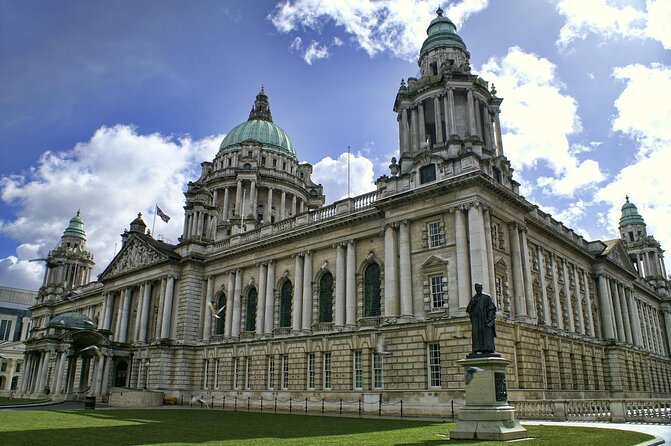
The tour begins in the grounds of Belfast City Hall at Donegall Square North. This is a practical meeting point, easy to find in the centre and close to public transportation.
The first 20 minutes set the political and historical groundwork. You will hear about the long relationship between Britain and Ireland, the divisions that shaped Northern Ireland, and why conflict intensified in the late 1960s.
This opening is important because the tour does not throw you straight into a list of attacks. It gives you the background needed to understand why identity, religion, national allegiance, and government became so tightly connected.
City Hall also makes a useful starting place because the surrounding streets look calm and familiar. That contrast is part of the lesson. The city centre you see today was once controlled through barriers, security checks, and the constant threat of attack.
Donegall Place and the Ring of Steel
The next stop is Donegall Place, now one of Belfast’s main shopping streets. You might pass through it without noticing anything unusual, which is exactly why it works well as a history stop.
Here, the guide explains a 1971 bomb attack on a nightclub and the tragic events that followed. You will also learn about the introduction of the Ring of Steel, a network of security measures intended to protect central Belfast.
This part of the walk shows how violence changed ordinary routines. Shopping streets were not simply places to browse. Access, movement, and public safety became matters of daily concern.
The stop lasts about 15 minutes. It is mainly a listening point, so you may spend more time standing than walking. If it is wet, look for a place where you can hear the guide without blocking others, and bring a waterproof jacket rather than trusting a short weather forecast.
Castle Lane and the reality of daily fear
Castle Lane takes the tour deeper into the pedestrian shopping area. The setting is busy with everyday city life, yet the guide uses it to explain what Belfast felt like at the height of The Troubles.
You will hear about an event that remains strongly remembered in the city. The value here is not only the event itself, but the sense of how violence entered familiar spaces. A shopping street could become a place associated with loss, warning, and fear.
This is one of the points where the tour’s personal approach matters most. Political history can feel distant when it is presented only through dates and organizations. Personal accounts bring the human cost closer, while still allowing the guide to explain the wider forces at work.
The stop lasts around 15 minutes. If you prefer a tour with constant movement and photo opportunities, this may feel slow. If you want to understand how the conflict affected daily life, it is a useful pause.
More walking tours in Belfast:
- Belfast Political Tour-Conflicting Stories Walking Tour
★ 4.5 · 459 reviews - Best of Belfast Walking Tour
★ 5.0 · 399 reviews - Belfast Eclectic Walking City Center Experience, The Marti Way
★ 5.0 · 348 reviews - Belfast Troubles Murals Street Art and Peace Wall Walking Tour
★ 5.0 · 163 reviews
The Spirit of Belfast and the events of 1971
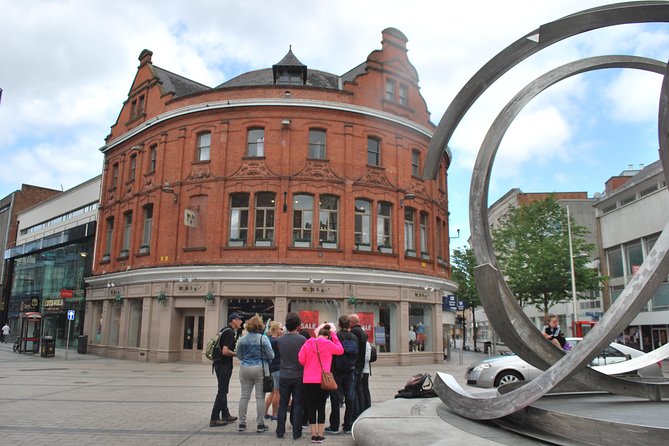
At the Spirit of Belfast sculpture, you will encounter one of the city’s best-known pieces of public art. Its curved metal form is often nicknamed the Onion Rings, and the artwork is meant to suggest resilience.
The guide uses this spot to discuss a series of events that began in a nearby bar in 1971. Those events helped push Northern Ireland into a faster and more violent phase of conflict.
This is a strong example of the tour’s method. The guide places a modern artwork beside a difficult story, then connects the two through Belfast’s long effort to recover and rebuild. You are not asked to forget the past, but you are shown how the city now marks survival and hope in public spaces.
The stop is scheduled for about 15 minutes. It is another listening point, and the headsets should help you follow the explanation while standing outdoors.
The Cathedral Quarter, from violence to peace
The route continues into the Cathedral Quarter, now one of Belfast’s main areas for culture, nightlife, street art, and bars. Its lanes and alleys feel very different from the Belfast described in the earlier stops.
Here, the guide covers more major events and begins to explain the path toward peace. The physical changes in the area help make that transition clear. A regenerated cultural district is not proof that every problem has disappeared, but it shows how much the city has changed.
I particularly like this part because it avoids presenting peace as a single moment when everything was fixed. The guide discusses a fragile peace and the work still required to protect it. That is more honest than a simple before-and-after story.
The Cathedral Quarter stop lasts about 20 minutes. You will see street art and lively public spaces, but this is not a dedicated art tour or nightlife tour. The art and bars provide a setting for the history, not the main subject.
The emotional tone also becomes stronger here. Several guides have been praised for naming victims and sharing personal experiences. That makes the tour moving, but it can also be difficult. I would not book this as casual entertainment, especially if you are traveling with children under the minimum age of 12.
Ann Street and policing during The Troubles
At Ann Street, the guide discusses policing in Northern Ireland and changes made after the peace agreement. The stop takes place beside Belfast’s largest police station, giving the discussion a direct connection to the city’s security system.
You will learn how Northern Ireland was policed during The Troubles, how policing changed after the agreement, and how Brexit may affect borders and politics. This brings the tour into the present rather than leaving the conflict sealed in the past.
That current focus is useful because Belfast’s political questions did not end with the peace agreement. The tour gives you a way to understand why borders and constitutional issues still matter in Northern Ireland.
The stop is about 15 minutes. Again, expect to listen rather than explore an interior site. There is no admission fee for the tour’s stops, and the value comes from the guide’s explanation.
Finishing beside the River Lagan
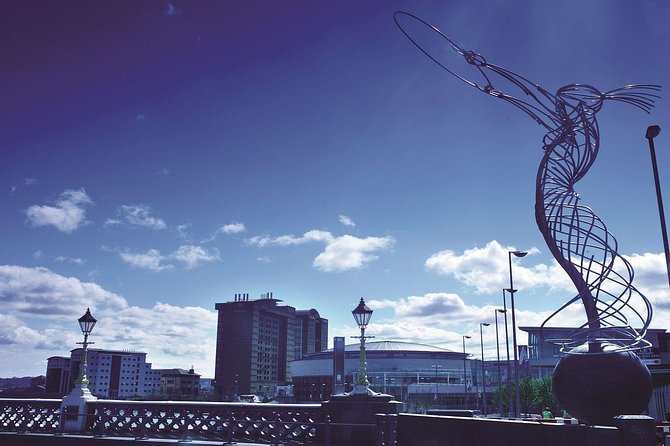
The final stop is the Beacon of Hope on Oxford Street, beside the River Lagan. This public artwork celebrates resilience and regeneration, making it a fitting place to compare Belfast today with some of its darkest years.
The last 20 minutes bring together the main ideas: how peace was achieved, why it remains fragile, and what the future might hold. Ending here gives the tour a hopeful tone without pretending that the past has vanished.
The tour ends at Oxford Street, about a five-minute walk from City Hall. That makes the finish convenient if you want to return to the centre, continue sightseeing, or find somewhere to eat.
The riverside setting also offers a small change of pace after several serious city-centre stops. Do not expect a long scenic break, though. The guide is still completing the historical argument, and the closing discussion is an important part of the experience.
How much walking is involved?
The route covers roughly 1.5 miles over about two and a half hours. Belfast city centre is flat, with no hills or steps on the route, so the physical effort is modest.
The bigger issue is standing. One assessment of the tour noted that it involved more listening than actual walking, and that is useful advice. The itinerary includes seven stops, with several 15 to 20 minute talks. You may find dry seating at some points, but you should not count on sitting throughout.
Wear comfortable shoes and dress for outdoor conditions. A waterproof jacket is sensible in any season, while warm clothing matters in winter. The tour operates in changing weather, and the booking terms allow a new date or full refund if the experience is canceled because of poor conditions.
The group can include up to 25 people. That is not a tiny private walk, but it is still small enough for a guide to keep the group together. The headsets are especially helpful near traffic, pedestrians, and city noise.
The guide makes or breaks the experience
This tour depends heavily on the person leading it. The route itself is straightforward, but the stories require care, accuracy, and balance.
The strongest guides combine political explanation with personal memory. Anne has been praised for recounting what it was like to grow up during the conflict. Róisín is described as a passionate storyteller who helped people picture the period emotionally. James is praised for making the subject engaging without losing its seriousness.
Mylie has also received strong praise for presenting both sides of the story and connecting Belfast’s past with its present. One participant, who grew up during The Troubles and had previously heard only one side from an English perspective, found this balanced approach especially valuable.
That does not mean every guide will use exactly the same style. Some may be more humorous, some more emotional, and some more formal. The common strength is the effort to explain rather than sensationalize.
The one serious warning concerns audio equipment. A speaker failure once made it difficult for people at the back to follow the tour. Since the tour includes a maximum of 25 people, arrive ready to position yourself where you can hear clearly, and tell the guide promptly if the audio is not working.
Is $36.06 good value?
At about $36.06 per person, this is not the cheapest way to walk around Belfast. You can visit the streets and public artworks without paying an admission fee.
The fee pays for the guide’s research, structure, local perspective, and ability to connect scattered sites into one story. Without that explanation, Donegall Place is simply a shopping street, the Spirit of Belfast is simply public art, and the Cathedral Quarter is simply a place for food and drinks.
For a two-and-a-half-hour tour, the price is fair if The Troubles is a major reason you are visiting Belfast. It is especially good value if you are new to the subject and want a balanced starting point before visiting other historical sites.
It is less suitable if you only want architecture, shopping, or a broad introduction to Belfast’s landmarks. Much of the time is devoted to politics and violence, not general city trivia.
The tour is booked around 24 days ahead on average, so I would not leave it until the last morning of a short visit. Its 10:30 a.m. start also makes it a useful first-day activity, giving you context for the rest of your time in Belfast.
Who should book this walking tour?
I would recommend it to adults and older teenagers who want to understand Belfast beyond its modern cafés and attractive streets. The minimum age is 12, but parents should consider the serious subject matter before bringing younger members of the family.
It suits you especially well if you:
- Want a balanced introduction to The Troubles
- Prefer local voices and personal stories
- Like walking tours that explain current politics as well as past events
- Are comfortable with emotional and sometimes upsetting material
- Want to get your bearings in central Belfast on your first day
It may not suit you if you want a relaxed sightseeing walk, dislike standing outdoors, or prefer to avoid stories about bombings and loss of life.
The tour is offered in English only. Service animals are allowed, and most people can participate because the route is flat and free of steps.
Should you book A History of Terror?
Yes, if you want the difficult story behind Belfast’s familiar streets. The tour is praised by 99 percent of participants and has a rating of 5 from 2,882 reviews, but the real reason to choose it is its serious, human approach.
I like that it connects major political events with ordinary places and individual lives. I also like that it ends with peace and regeneration rather than leaving you only with scenes of violence.
Book it if you want context, personal stories, and a careful explanation of both sides. Skip it if you are seeking a cheerful city orientation or a tour with little standing. For many visitors, this will be one of the most useful ways to begin understanding Belfast.
FAQ
Where does the Belfast walking tour start?
The tour starts in the grounds of Belfast City Hall at Donegall Square North, Belfast BT1 5GS.
What time does the tour begin?
The tour starts at 10:30 a.m.
Where does the tour end?
It ends at the Beacon of Hope on Oxford Street beside the River Lagan. From there, it is about a five-minute walk back to Belfast City Hall.
How long does the tour last?
The tour lasts approximately two hours and 30 minutes.
How far do you walk?
The route covers about 1.5 miles through Belfast city centre.
Is the route difficult?
The route is flat and has no hills or steps. Comfortable footwear is still recommended, and you should be prepared to stand during several talks.
What language is the tour offered in?
The tour is offered in English.
What happens if the weather is poor?
The tour takes place in changing weather, so a waterproof jacket and suitable warm clothing are recommended. If the experience is canceled because of poor weather, you will be offered another date or a full refund.
Just added around Belfast
- Belfast City Airport (BHD) to Belfast Accommodation – Arrival Private Transfer★ 5.0 · 3 reviews
- Game of Thrones scene location inc Giants causeway from Belfast★ 5.0 · 3 reviews
- Belfast history of terror & mural 1 hr express private taxi tour★ 5.0 · 3 reviews
- Belfast Private Walking Tour with a Local★ 3.0 · 3 reviews
- Experience the Antrim Coast and the Land of Giants – Private Tour★ 5.0 · 3 reviews
- Private Coast Tour in Belfast★ 5.0 · 3 reviews
- Giants Causeway Tour From Belfast including Game of thrones sites★ 5.0 · 3 reviews
- Belfast to Dublin Transfer★ 5.0 · 3 reviews
Historical Tours, compared.
Private Political History & Murals Tour Belfast
Read our review →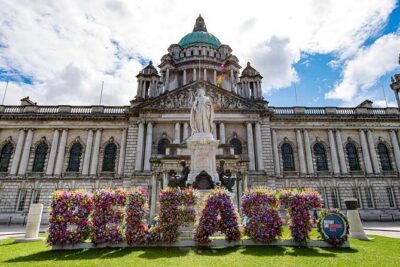
Belfast Political/history/troubles private taxi/cab tour
Read our review →
1 Hour Express Belfast Taxi/Cab Tour History, Murals, Troubles
Read our review →
Belfast by the Glass: alternative history of Belfast, sip by sip.
Read our review →
2 Hour Terror and Mural History Belfast taxi Private Tour
Read our review →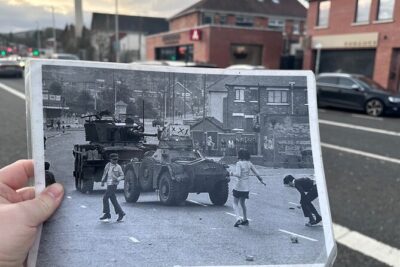
History of Belfast conflict and terror 1 hour black taxi tour
Read our review →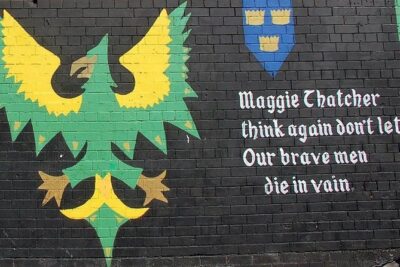
Belfast history of terror & mural 1 hr express private taxi tour
Read our review →Browse the lists this tour appears in