
Reviewed · BLACK TAXI TOURS
Private Belfast Troubles Cab Tour Adventure 2hrs Personal Guide
Belfast’s past is still written on its walls. This two-hour private cab tour brings you into the Falls Road, Shankill Road, and Peace Wall areas with a local guide who explains the people, places, and events behind the murals. I like the small private format and the chance to ask direct questions. I also like that you can choose a pickup time between 7 a.m. and 4 p.m., a useful touch for fitting this tour around a Belfast day.
The strongest part is the human explanation. Guides such as Brendan, Stevie, and Sean Mc have been praised for giving careful detail, answering questions, and presenting both republican and loyalist viewpoints. The main caution is that the advertised vehicle may not always be a traditional black taxi. One guest received a Mercedes people carrier instead, and the pace and emphasis can depend heavily on the individual guide.
In This Review
- What makes this Belfast tour worth considering
- Why a private cab is useful in Belfast
- Starting on the Falls Road
- St Peter’s Cathedral and the Catholic district
- Crumlin Road Gaol and the old courthouse
- Clonard Monastery and the peace process
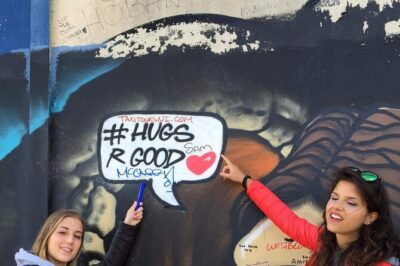
- The Peace Wall and messages of hope
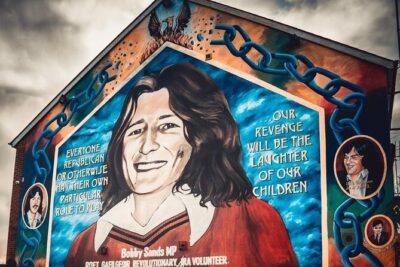
- Bobby Sands and the Falls Road murals
- Crossing to Shankill Road
- Memorial gardens and community memory
- Guide quality matters more than the vehicle
- Is $122.64 per person good value?
- Who should book this tour?
- Final verdict
- FAQ
- How long is the Belfast Troubles cab tour?
- What time can the tour depart?
- Is hotel pickup available?
- Is this a private tour?
- Is the tour conducted in English?
- Can I cancel for a full refund?
What makes this Belfast tour worth considering
- First-hand local storytelling: Guides explain the Troubles through the streets where the conflict took place, rather than relying only on dates and textbook facts.
- Falls Road and Shankill Road together: Seeing both republican and loyalist districts helps you understand Belfast’s divided geography.
- Peace Wall visit: You can add your name and a message of hope beside signatures from figures including Bill Clinton and the Dalai Lama.
- Private vehicle and flexible pickup: Only your group takes part, with pickup and drop-off offered within 1 kilometer of Belfast City Hall.
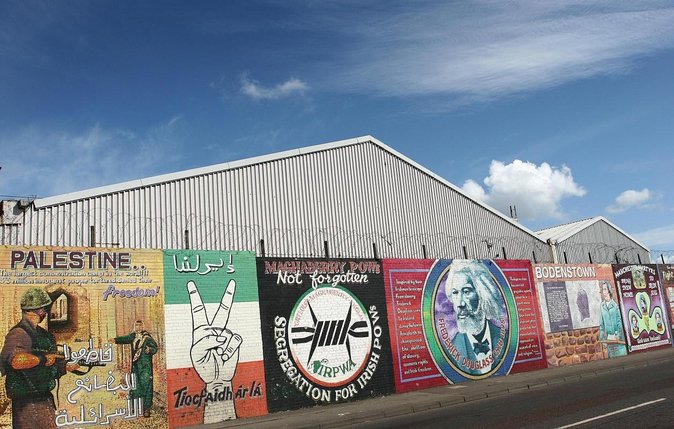
- Murals with political meaning: Bobby Sands, the IRA, the UVF, the UDA, military service, prisoners, and civilian victims all appear in the story.
- A serious subject in a compact format: Two hours gives you a useful introduction, though it cannot cover every part of Northern Ireland’s conflict.
Why a private cab is useful in Belfast
The private format changes the feel of this tour. You are not following a large group behind a flag or trying to hear a guide over traffic. Your guide can adjust the explanation to your interests, spend more time on a mural that catches your attention, or move on when you have enough information.
That flexibility is especially helpful with the Troubles. You may want a basic introduction, or you may already know about internment, hunger strikes, republicanism, loyalism, and the peace process. A private guide can respond to your questions instead of delivering one fixed speech.
The tour is offered in English, and the vehicle provides shelter between stops. That matters in Belfast, where the weather can change quickly. The tour includes hotel pickup and drop-off within 1 kilometer of Belfast City Hall, but you should confirm the exact meeting point when booking.
One practical point deserves attention. The name suggests a black taxi tour, yet at least one booking used a Mercedes people carrier. If the classic black cab itself is important to you, ask before paying. The vehicle may be less important than the guide, but it is reasonable to clarify what you are buying.
More black taxi tours in Belfast:
- Cab Tours Belfast Famous Black Taxi Tours
★ 5.0 · 3,633 reviews - Private Black Taxi Belfast City Tour
★ 5.0 · 2,188 reviews - Belfast’s Political Mural Taxi Tour
★ 5.0 · 1,180 reviews
Starting on the Falls Road
The tour begins around the foot of Falls Road, near a colorful welcome mural associated with the birth of the Provisional Irish Republican Army and its fight against the British Army. This is an effective introduction because the street is not treated as a distant museum display. The guide connects the murals and buildings to the struggle that took place in these narrow streets.
The Falls area also has a connection to the film In the Name of the Father, starring Daniel Day-Lewis and Emma Thompson. The film is based on the life of Gerry Conlon and includes the Divis complex. If you know the movie, this gives the opening section an extra point of reference. If you do not, the guide can still use the location to explain how political violence affected ordinary neighborhoods.
You will also see memorials to republican volunteers, civilians from the Lower Falls, and republican prisoners who died between 1916 and 1970. These sites are important, but they require care. The memorials reflect a particular community’s view of the conflict, so listen for what is remembered and what may not be included.
St Peter’s Cathedral and the Catholic district
St Peter’s Cathedral sits in the Divis Street area of the Falls Road. Construction began in the 1860s, and its French Gothic design gives the district a striking landmark. The cathedral is the Roman Catholic seat for the Diocese of Down and Connor and is home to St Peter’s Schola Cantorum choir.
The tour information says your guide may bring you inside if you ask. That makes this a good moment to speak up if architecture interests you. The visit is not simply another political stop. It adds religious, cultural, and architectural context to an area usually seen through the lens of conflict.
The schedule includes St Peter’s more than once alongside the Peace Wall, which suggests the exact order can vary or that some entries are combined. In a two-hour tour, you should expect a brisk route rather than long visits inside every site. Ask your guide early how much time is available for the cathedral.
Crumlin Road Gaol and the old courthouse
Across from Crumlin Road Gaol is the former courthouse, a place linked to political prisoners who received sentences ranging from five years to life. The route includes a photo stop outside the jail and courthouse rather than a full prison visit.
The jail is described as the Hanging Jail, with 17 people losing their lives there. That detail gives the stop a grim weight, but the tour does not appear to include admission to the prison. You will mainly see the exterior and hear how prisoners were transported between the jail and courthouse.
This stop works best if you are interested in the machinery of imprisonment and justice during the conflict. It may feel brief if you expected an indoor prison tour. The advantage is that it keeps the focus on the political story and allows the cab to cover more ground.
More mural and peace wall tours in Belfast:
- Belfast Troubles Tour: Walls and Bridges
★ 5.0 · 853 reviews - Famous 1.5 hour Belfast Murals Tour
★ 5.0 · 477 reviews - Belfast Political Tour-Conflicting Stories Walking Tour
★ 4.5 · 459 reviews - Belfast Murals Taxi Tour
★ 5.0 · 341 reviews
Clonard Monastery and the peace process
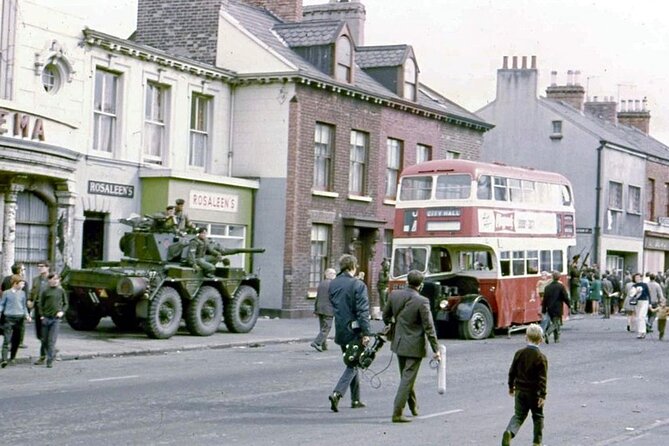
Clonard Monastery was built in 1911 in French Gothic style and is home to the Redemptorist priests. Its importance here is not only religious. During the early years of the peace process, the British secret service reportedly bugged meetings involving Gerry Adams, John Hume, and Father Alec Reid.
That connection shows why the peace process did not happen only in government buildings. Religious figures, political leaders, and community contacts all played roles. If you want to see inside the monastery, ask your guide. The tour information says the guide will happily bring you in to view the building when possible.
This is one of the more useful stops for understanding the transition from conflict toward negotiation. It also gives the route a pause from murals and memorials. The subject remains political, but the setting is quieter and more reflective.
The Peace Wall and messages of hope
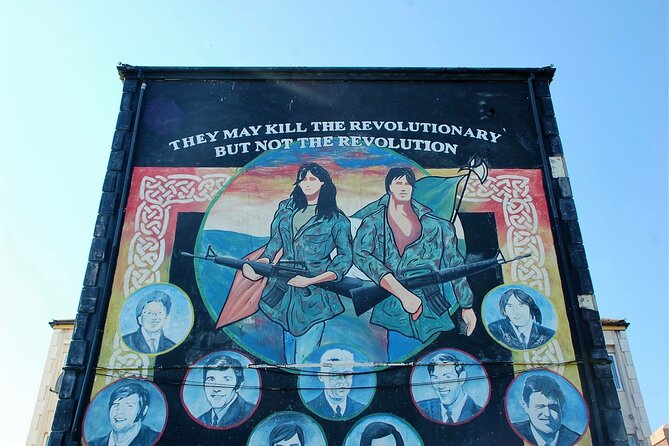
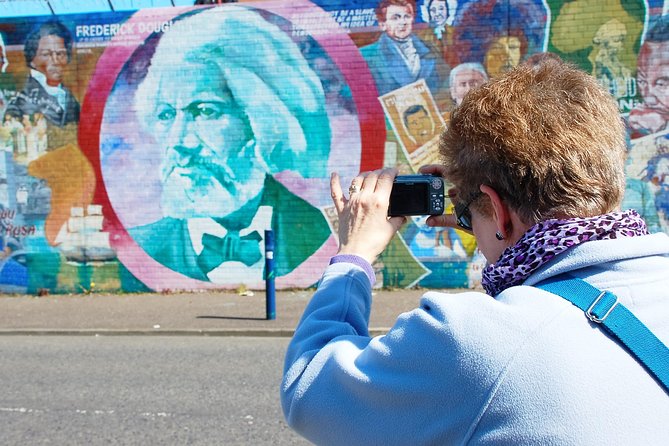
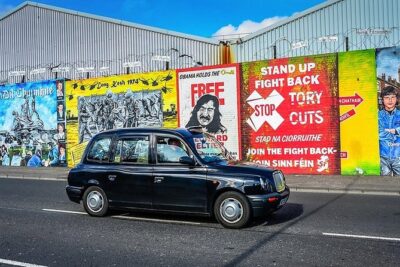
The Peace Wall remains one of Belfast’s clearest symbols of division. It still separates communities, despite the progress made since the worst years of the Troubles. Your guide explains its purpose and history, and you can write your name or a message of hope on the wall.
The signatures of Bill Clinton and the Dalai Lama help show how much international attention Belfast received. Still, do not treat the wall as a finished monument. Its continued presence is part of the story. It represents both progress and an unresolved physical divide.
I find this stop valuable because it makes the political geography easy to grasp. You are not just hearing that Belfast was divided. You are seeing a barrier that remains in place. The visit is listed at about 20 minutes, though a private tour may adjust the timing.
Bobby Sands and the Falls Road murals
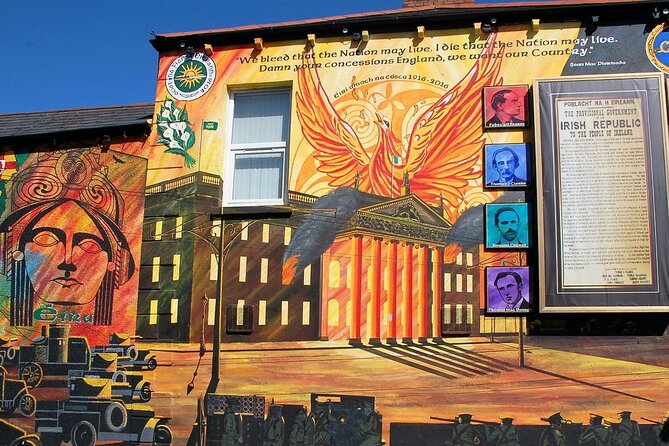
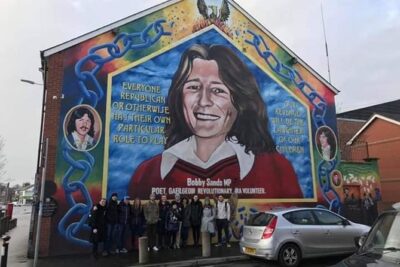
The Bobby Sands mural is one of Belfast’s most photographed political murals. It is located near Sinn Féin headquarters and commemorates Bobby Sands, the IRA hunger striker and MP.
This is a powerful stop, but it is also one where your guide’s balance matters. Sands is remembered very differently by different communities. A good explanation should address his political role, the hunger strike, and the emotional meaning of the mural without turning the stop into a slogan.
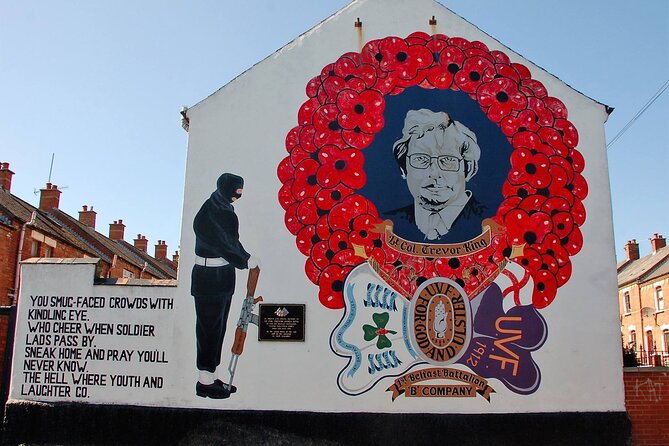
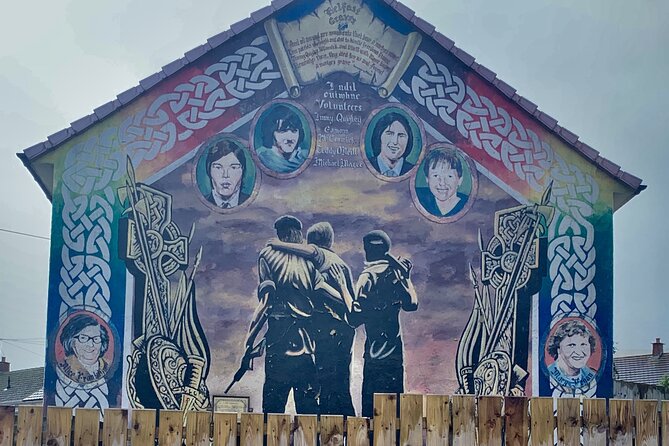
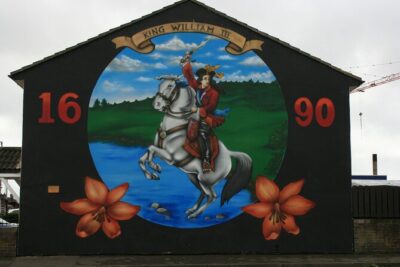
You will see several murals during the route, not only Bobby Sands. Some commemorate volunteers and prisoners. Others express political identity, military links, or community memory. The appeal of a local guide is that you can ask who created a mural, what it refers to, and how people in the area view it today.
Crossing to Shankill Road
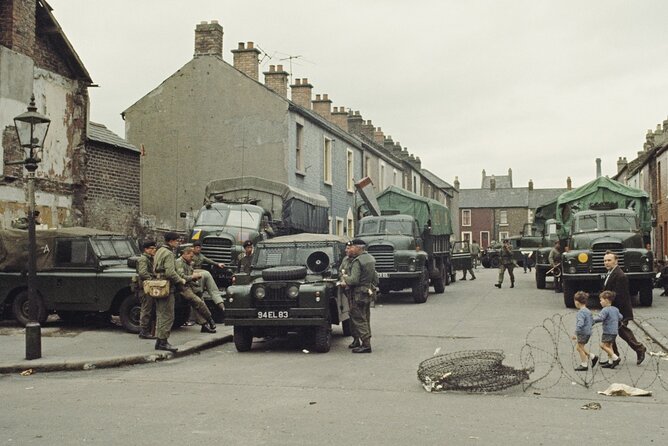
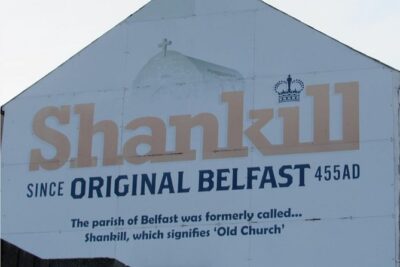
The move from Falls Road to Shankill Road is the central strength of the route. Shankill is described as the heart of loyalism and the birthplace of the UDA and UVF. Here, the guide discusses British and Irish regiments that fought in the First and Second World Wars, as well as the later conflict with republicanism.
The point is not to decide which side is right. It is to understand how identity, memory, military service, and neighborhood loyalty shaped Belfast. Seeing the republican and loyalist areas in one short route gives you a clearer sense of the physical closeness of communities that remained politically far apart.
The tour also covers the 1975 Bayardo Bar attack on Aberdeen Street in the loyalist Shankill area. An IRA unit led by Brendan McFarlane attacked the pub, claiming it was frequented by members of the UVF. Four Protestant civilians and one UVF member were killed, and more than 50 people were injured.
This is difficult material, and the guide’s tone matters. You should expect an account of violence and civilian loss, not a light sightseeing stop. The subject is valuable for understanding the cost of the conflict, but it may not suit very young children or anyone looking for an easygoing city tour.
Memorial gardens and community memory
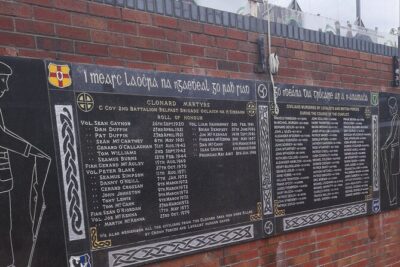
The Clonard Martyrs Memorial Garden commemorates volunteers from C Company, 2nd Battalion, Belfast Brigade, as well as civilian casualties from Greater Clonard and republican prisoners who died between 1916 and 1970.
Like the other memorials, this garden presents a community memory. I recommend paying attention to the names and categories of people remembered. Volunteers, prisoners, and civilians are grouped within a political framework, and that tells you how the community understands its losses.
The route also includes a memorial for volunteers from D Company, 2nd Battalion, Belfast Brigade, civilian casualties from the Lower Falls, and republican prisoners from the area. These locations can feel repetitive if you are not interested in memorial culture, but together they show how extensively the conflict is recorded at neighborhood level.
Guide quality matters more than the vehicle
The most important choice here is the guide. Brendan is praised for giving detail and context while speaking with compassion rather than focusing on his own personal story. Sean Mc is praised for thoughtful answers and for helping a family understand a difficult period. Stevie is noted for showing both sides of the conflict, and Brendan is also described as tailoring the route to the group’s interests.
That variety is a reminder that this is a guide-led experience. Two hours with a calm, fair-minded guide can be excellent. The same route can feel rushed or uncomfortable if the commentary becomes too fast, too partisan, or too focused on laminated photographs.
The published rating is 4.8 from 55 ratings, with 96 percent recommending the experience. Those figures suggest a strong record, but they do not remove the need for sensible expectations. One sharply negative account described only three stops, extended time at each, rapid-fire historical information, and concern about photography near homes. The provider replied that the tour had covered the advertised Falls Road, Shankill Road, and Peace Wall areas, and that the passenger had been asked not to photograph through vehicle windows toward private homes.
My advice is simple: ask questions, listen carefully, and respect local residents. This is a living neighborhood, not a film set. Photography should follow your guide’s instructions, especially around homes and sensitive memorials.
Is $122.64 per person good value?
At $122.64 per person, this is not the cheapest way to see Belfast. Yet the price can make sense for a private group that wants a local explanation, flexible departure time, and direct pickup.
The value is strongest when two or more people share the vehicle and take advantage of the private format. You are paying for transport, a personal guide, and access to a route that is difficult to understand from casual sightseeing alone. A large group may prefer a lower-cost shared tour, but you would give up some privacy and question time.
The tour is booked about 24 days ahead on average, so popular departure slots may fill. You can choose a time between 7 a.m. and 4 p.m., which helps if you want to visit Titanic Belfast, Belfast City Hall, or another attraction before or after the cab tour.
Confirmation is provided at booking. Free cancellation is available up to 24 hours before the start time. If poor weather causes cancellation, you are offered another date or a full refund. Food and drinks are not included, although a two-hour route does not normally require a meal break.
Who should book this tour?
I would choose this tour if you want a serious introduction to the Troubles, prefer a private vehicle, and value conversation over a standard sightseeing circuit. It suits adults, families with older children, and anyone interested in political murals, memorials, community identity, and the peace process.
You should think twice if you want a traditional black cab specifically, a full interior visit to Crumlin Road Gaol, or a gentle city tour with little discussion of violence. The subject is heavy, and the route is compact. You may hear a great deal in a short time.
The tour is in English, children must be accompanied by an adult, and service animals are allowed. Most people can participate, and the route is near public transportation. Pickup and drop-off are offered within 1 kilometer of Belfast City Hall.
Final verdict
I recommend this private Belfast cab tour for its route, local perspective, and strong guide potential. The Falls Road, Peace Wall, Clonard, Crumlin Road, and Shankill Road make a useful sequence because you see both sides of Belfast’s division rather than only one political story.
Book it if you want a personal, serious conversation about the city’s recent past. Before booking, confirm the vehicle type, meeting point, and how your guide handles photography. If you do that and arrive ready to listen, two hours can give you a far clearer understanding of Belfast than a mural photo taken without explanation.
FAQ
How long is the Belfast Troubles cab tour?
The tour lasts approximately two hours.
What time can the tour depart?
You should select a departure time between 7 a.m. and 4 p.m.
Is hotel pickup available?
Yes. Pickup and drop-off are offered for hotels within 1 kilometer of Belfast City Hall.
Is this a private tour?
Yes. Only your group participates in the private activity.
Is the tour conducted in English?
Yes. The experience is offered in English.
Can I cancel for a full refund?
Yes. You can cancel at least 24 hours before the start time for a full refund. Changes or cancellations made less than 24 hours before the start time are not accepted, and poor weather cancellations offer another date or a full refund.
Just added around Belfast
- Belfast City Airport (BHD) to Belfast Accommodation – Arrival Private Transfer★ 5.0 · 3 reviews
- Belfast history of terror & mural 1 hr express private taxi tour★ 5.0 · 3 reviews
- Game of Thrones scene location inc Giants causeway from Belfast★ 5.0 · 3 reviews
- Experience the Antrim Coast and the Land of Giants – Private Tour★ 5.0 · 3 reviews
- Belfast Private Walking Tour with a Local★ 3.0 · 3 reviews
- Giants Causeway Tour From Belfast including Game of thrones sites★ 5.0 · 3 reviews
- Belfast to Dublin Transfer★ 5.0 · 3 reviews
- Private Coast Tour in Belfast★ 5.0 · 3 reviews
Black Taxi Tours, compared.
Browse the lists this tour appears in