
Reviewed · BLACK TAXI TOURS
N0 1 Belfast black cab Irish and British mural 2hr private tour
The walls still divide Belfast. This private black cab tour takes you through Republican and Loyalist districts, past murals, former prisons, court buildings, and the Peacewalls that have separated communities for decades. I like the firsthand political context and the chance to enter areas that can be awkward to locate alone. I also like the flexible pickup from central Belfast hotels.
The main caution is the vehicle and guide delivery. One account describes a noisy blue taxi that made the driver hard to hear, along with a fast, difficult-to-follow accent. The advertised experience is also described as lasting up to two hours, but the actual route may feel shorter or longer depending on stops and conversation.
In This Review
- Key points about Belfast’s private black cab tour
- Why this tour helps explain Belfast
- Bombay Street and the beginning of the Troubles
- Crumlin Road courthouse and the old prison
- The Peacewalls, Belfast’s lasting divide
- Shankill Road and Loyalist identity
- Clonard Monastery and secret peace talks
- International Mural Wall on Divis Street
- Bobby Sands and the Falls Road story
- How much time the route really needs
- Price, private transport, and the cab itself
- Who should book this Belfast tour?
- Should you book the Belfast black cab tour?
- FAQ
- How long does the Belfast black cab tour last?
- How much does the tour cost?
- Is hotel pickup available?
- Is there an extra fee for pickup outside the free zone?
- Does cruise ship pickup cost extra?
- What areas does the tour visit?
- Is the tour suitable for children?
- What is included in the price?
Key points about Belfast’s private black cab tour
- Bombay Street gives the tour its emotional starting point: You see the area where homes were burned in 1969, an event widely viewed as the beginning of the Troubles.
- The Peacewalls are not a museum display: They are large physical barriers that still divide Republican and Loyalist neighborhoods.
- You visit both sides of Belfast’s political divide: The route includes Bombay Street, the Falls area, the Shankill Road, and Clonard.
- The guide’s lived experience matters: The tour is led by someone who has experienced the Troubles period, adding personal context to the political story.
- The itinerary is mural-heavy: Bobby Sands, the International Mural Wall, and Shankill Road murals provide strong photo stops and help explain competing identities.
- Check the vehicle and group limit before booking: The price is listed for up to two people, while one account refers to a three-person maximum and a different style of cab.
Why this tour helps explain Belfast
Belfast is not a city where the past stays behind glass. It appears on gable walls, street signs, memorial gardens, bonfire sites, and concrete barriers. A private cab tour gives you a way to see these places while someone explains why they matter.
I like the format because you are not simply driven past a mural with a quick label. The route connects the images to neighborhoods, political groups, prison history, and the events that shaped modern Northern Ireland. The guide can also answer questions as you go, something a self-guided drive cannot easily provide.
The subject is serious. This is not a sightseeing ride in the usual sense, and some stops concern imprisonment, hunger strikes, violence, and burned homes. You should expect a direct account of the Troubles rather than a polished city tour designed only for pleasant photographs.
The tour is private, so only your group participates. That gives you more freedom to ask questions and pause for pictures, though the quality of the experience depends heavily on the driver’s speaking style and the condition of the cab.
More black taxi tours in Belfast:
- Cab Tours Belfast Famous Black Taxi Tours
★ 5.0 · 3,633 reviews - Private Black Taxi Belfast City Tour
★ 5.0 · 2,188 reviews - Belfast’s Political Mural Taxi Tour
★ 5.0 · 1,180 reviews
Bombay Street and the beginning of the Troubles
The first major stop is Bombay Street, in a Republican part of Belfast. The tour passes through the Peacewalls into an area where homes were burned in 1969.
This stop gives the rest of the route a clear starting point. You are not beginning with an abstract political timeline. You are looking at a real residential street connected with the outbreak of intense conflict. The tour presents 1969 as the point commonly viewed as the beginning of the Troubles.
You get about 10 minutes here, with no admission charge. That is enough for a short explanation and photographs, but not a long neighborhood walk. The setting is residential, so listen carefully and follow the guide’s instructions about where to stand and when to take pictures.
I find this an important early stop because it shows that the conflict was not confined to government buildings or distant battlefields. Ordinary streets and houses were caught in it. That point can be easy to miss if you only visit central Belfast attractions.
Crumlin Road courthouse and the old prison
The route then brings you to Crumlin Road courthouse, positioned opposite the former gaol. A tunnel beneath the main road once connected the court and prison, allowing prisoners to be moved after sentencing.
The explanation follows the path from courtroom to imprisonment. A person received a sentence at the courthouse, then could be transferred to the H Blocks or Maze prison. That connection helps you understand Belfast’s wider prison system and the place of political prisoners within it.
The former prison was built in the 1800s and operated as a Victorian jail. It also served as a hanging jail until the 1960s. IRA, UVF, and UFF prisoners were held there on remand.
This is one of the more useful historical stops because it places the Troubles inside older institutions. The prison was not created for the conflict, but it became part of the machinery through which the conflict was handled. You may only stop briefly, so this is a place where the guide’s explanation carries much of the value.
The Peacewalls, Belfast’s lasting divide
The Peacewalls are the central feature of the tour. Belfast’s barriers are often compared with Berlin’s walls, and the route describes them as far higher and extending across the city. They have divided Republican and Loyalist communities for more than 50 years.
The name Peacewall can sound reassuring, but the physical reality is stark. These are barriers built to separate communities that once faced violence at close range. Seeing them from a black cab gives you a practical sense of how streets, homes, and routes were divided.
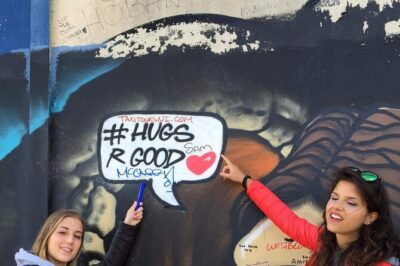
You have about 30 minutes at this part of the tour. You can sign your name beside messages from presidents and film stars, along with statements supporting peace. That makes for a memorable photograph, but it is worth taking a moment to look beyond the signed wall. The important story is not simply that famous people visited. It is that the barriers remain a part of daily life.
I would ask the guide how the walls affect local movement and community boundaries today. The supplied information does not promise a detailed discussion of current politics, so ask direct questions if that subject matters to you.
More mural and peace wall tours in Belfast:
- Belfast Troubles Tour: Walls and Bridges
★ 5.0 · 853 reviews - Famous 1.5 hour Belfast Murals Tour
★ 5.0 · 477 reviews - Belfast Political Tour-Conflicting Stories Walking Tour
★ 4.5 · 459 reviews - Belfast Murals Taxi Tour
★ 5.0 · 341 reviews
Shankill Road and Loyalist identity
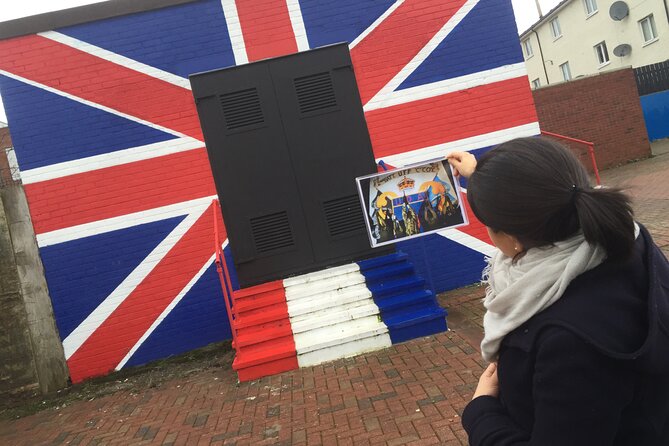
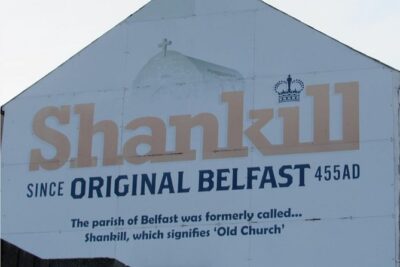
Shankill Road is presented as a birthplace of Loyalism, with more than 500 years of local history. The tour covers the UVF, UFF, and UDA, as well as the Loyalist struggle against Republicans.
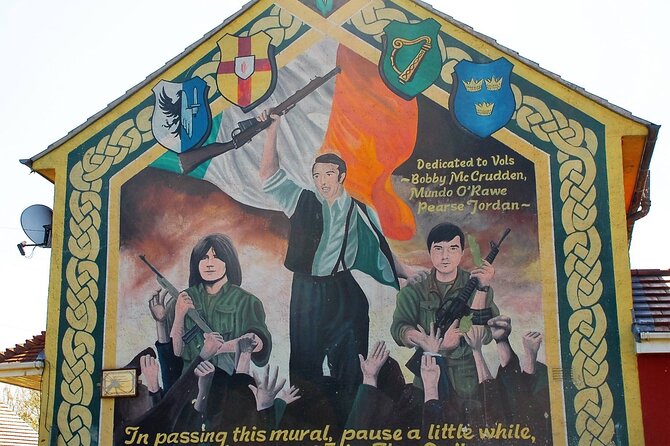
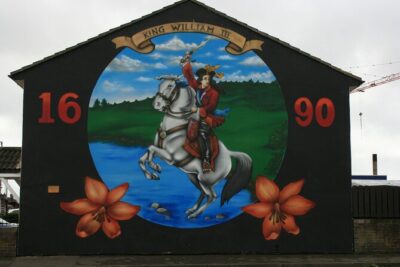
You also see bonfire sites associated with July celebrations and Loyalist identity. Murals on the gable ends of local homes provide the main visual focus. These walls are not random street art. They reflect political allegiance, remembrance, and a sense of place.
The stop lasts about 30 minutes, making it one of the longer visits. That extra time is useful because the subject needs explanation. Without a guide, you might photograph a mural without understanding the symbols, initials, or historical references.
This is also where you should keep an open mind. The tour presents Loyalist history as one side of a conflict, not as a simple story with one community entirely right and the other entirely wrong. If you want a useful overview, pay attention to how the guide explains the relationship between local identity, British connection, and armed groups.
The bonfires are seasonal features, with July being the relevant month. You should not assume a bonfire will be lit during your visit. The tour is about viewing the sites and learning their meaning.
Clonard Monastery and secret peace talks
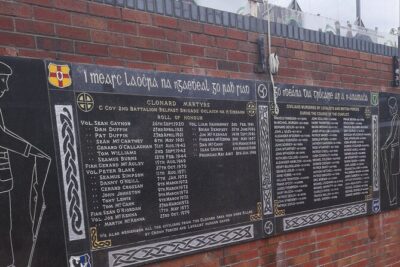
Clonard Monastery offers a different kind of stop. Built in the 1800s, it later became associated with secret peace discussions involving Gerry Adams and John Hume.
The talks were eventually discovered to have been bugged by MI5. That detail adds a layer of secrecy to a building that might otherwise look like a quiet religious site. The monastery is linked with behind-the-scenes efforts to move from conflict toward negotiation.
You spend about 10 minutes here. This is a short stop, but it changes the pace of the tour. After seeing burned streets, prison buildings, barriers, and militant murals, you reach a place connected with dialogue and political contact.
I like this contrast. Belfast’s story is not only about confrontation. It also includes private meetings, intermediaries, and attempts to build a way out. The stop will be most useful if you ask the guide to explain who Gerry Adams and John Hume were in the peace process and why secret talks were needed.
International Mural Wall on Divis Street
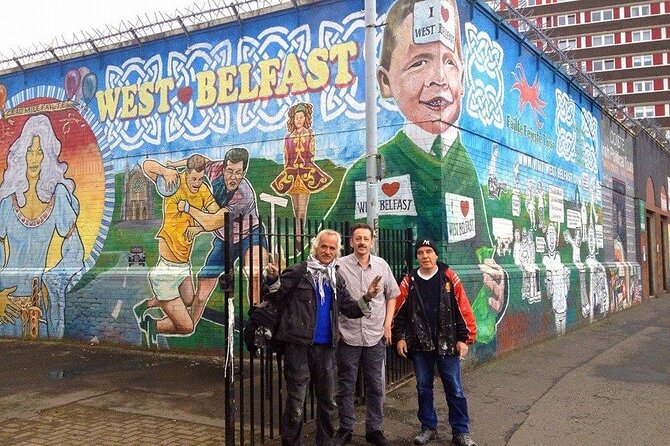
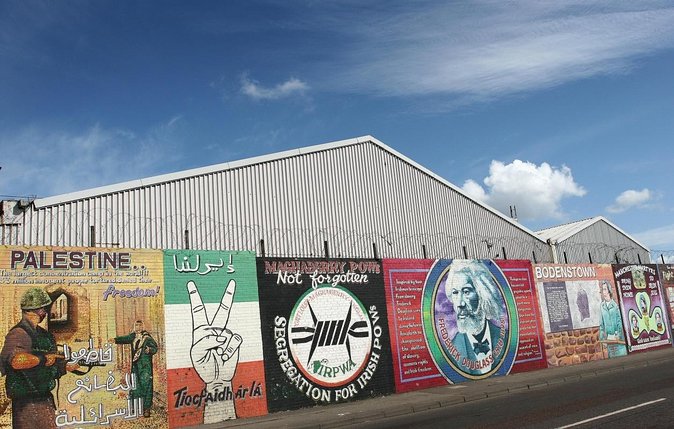
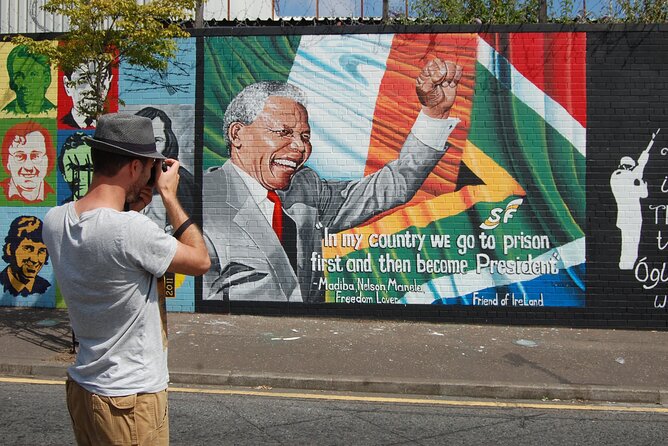
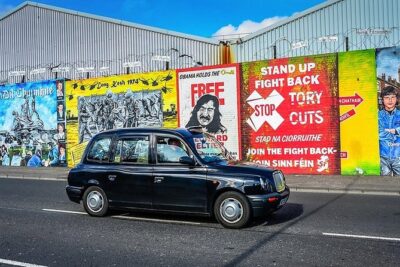
The International Mural Wall on Divis Street is one of the route’s more outward-looking stops. Local Republican artists hand-painted murals here about international conflicts and causes, including support for the Amazon rainforest.
You spend roughly 10 minutes at the wall. That is enough to see the artwork and hear the basic explanation, but the stop is not designed as a long art tour. The value comes from the connection between local political expression and wider global causes.
The wall also helps show that Belfast murals are not all identical in purpose. Some remember local deaths or armed groups. Others support international movements. Together, they show how public walls became a way for communities to announce political views and cultural identity.
Photography is a major part of this stop, but do not rush straight to the camera. Look at the subjects chosen by the artists. The themes tell you what each community wanted to place in public view.
Bobby Sands and the Falls Road story
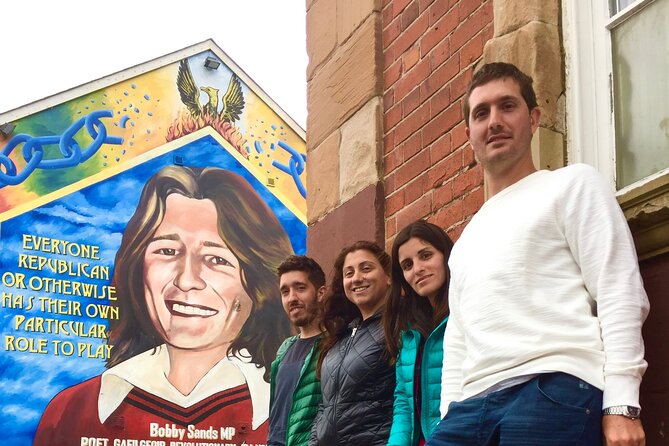
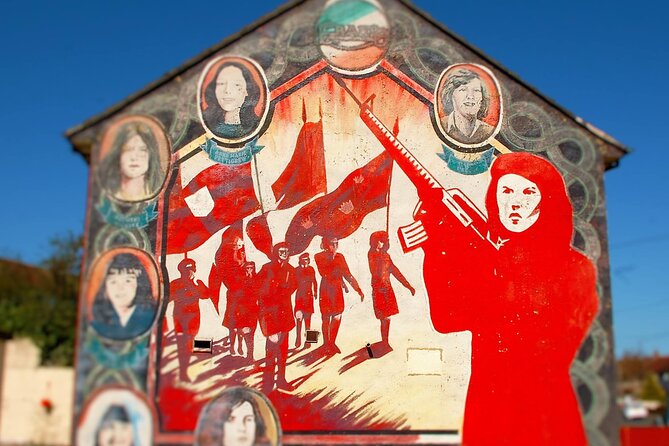
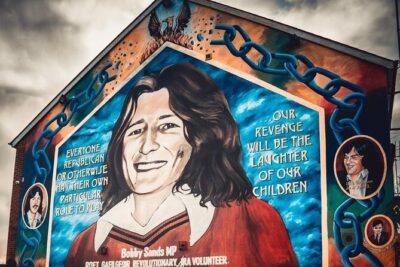
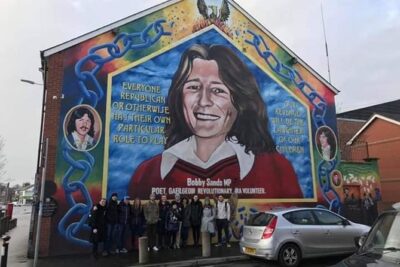
The tour includes the Bobby Sands mural, described as the most famous mural in the world. It is located in the Falls Road area, which became closely associated with the Provisional Irish Republican Army and with international news coverage of the Troubles.
The route lists Bobby Sands as two separate stops, each with about 10 minutes. In practice, these may represent two parts of the same mural area or two related visits, so I would confirm the exact arrangement when you book.
The guide explains the 1981 hunger strike and its role in the later path toward the 1994 truce. Bobby Sands became an international symbol during the hunger strike, and footage of the Troubles frequently features the Falls Road.
This is likely to be the most emotionally charged part of the tour. The mural is visually striking, but the story behind it concerns imprisonment, protest, death, and political change. You may want extra time for questions here, yet the listed schedule allows only about 10 minutes.
How much time the route really needs
The experience is advertised as approximately one and a half to two hours. The listed stops add up to about two hours, including 10 minutes at Bombay Street, 30 minutes at the Peacewalls, 30 minutes on Shankill Road, 10 minutes at Clonard Monastery, 10 minutes at the International Mural Wall, and two 10-minute Bobby Sands stops.
That makes the tour a compact introduction rather than a full-day examination of Belfast’s political past. You see many important locations, but most visits are brief. If you want long walks, museum interiors, or extended time at every mural, you will need additional sightseeing.
The flexible start times are useful. Pickup is recommended at several morning times, from 6:30 a.m. through 11:00 a.m. A morning departure can help you fit another Belfast activity into the afternoon, though the very early options will not suit everyone.
Round-trip pickup and drop-off are offered from Belfast city-center accommodation. The free pickup zone is within 1 kilometer of Belfast City Hall. Outside that area, a cash surcharge may apply.
Cruise ship pickup costs £25 each way per group, and the cabs can hold six people according to the pickup notes. That information does not match the listed booking price for up to two people, so cruise passengers and larger groups should confirm the total before reserving.
Price, private transport, and the cab itself
The listed price is $245.48 per group of up to two people. That is not cheap for a two-hour city tour, but the price can make sense if you value a private guide, door-to-door pickup, and a focused route through places that may be awkward to find alone.
For two people, you are paying for privacy rather than a low-cost group ride. You can ask questions without waiting for strangers, and the guide can adjust the discussion to your interests. For one person, the per-person value is much weaker.
The transport is part of the experience. A black cab is strongly associated with Belfast’s political tours, but the actual vehicle may vary. One account describes receiving a large blue taxi rather than the expected black cab, with rattling noise that made the driver difficult to hear.
That is a real concern, especially because the guide’s explanation is the heart of the tour. Ask about the vehicle when booking, and sit where you can hear clearly. If the guide speaks quickly or has an accent you find difficult to follow, politely ask for slower explanations. You are paying for the story as much as for the drive.
The tour provides a restroom on board, although the information does not explain its exact setup. Food and drinks are not included, so bring what you need for a short ride.
Who should book this Belfast tour?
I would choose this tour if you want a direct introduction to the Troubles and prefer local streets over a standard city-center sightseeing circuit. It suits visitors who want to see both Republican and Loyalist areas in one private outing.
It is also a good fit for families, since children can participate and child seats can be provided if requested in advance. Service animals are allowed, and the tour is near public transportation.
You should think twice if you need a perfectly polished vehicle, a slow and highly scripted presentation, or a long visit inside historic buildings. Most stops are roadside or exterior, and the experience depends on the driver’s communication.
This tour also works best when you already know a little about the Troubles. You do not need a university course, but reading a short timeline before you go will make the names, groups, and events easier to follow.
The tour has a 4.5 rating from six published ratings, including a particularly strong account praising its political history and the fact that the guide had lived through the period. A separate account raised serious concerns about vehicle noise and the guide’s speed and accent. Those two details point to the main lesson: the route is worthwhile, but confirm the practical arrangements and listening conditions.
Should you book the Belfast black cab tour?
Book it if you want a private, concentrated look at Belfast’s divided neighborhoods, especially the Peacewalls, Shankill Road, Bombay Street, Clonard Monastery, and Falls Road murals. The firsthand perspective and the ability to cross between Republican and Loyalist areas give the tour real value.
I would not book it without checking three things first: the exact vehicle, the number of people covered by the price, and the pickup surcharge for your location. If clear explanations and a quiet ride are important to you, make that clear before the day.
For two people staying near Belfast City Hall, the price is defensible because transport and a private guide are included. For a solo visitor, the cost is harder to justify. Either way, approach the tour as a serious history lesson on wheels, not a quick mural photo stop.
FAQ
How long does the Belfast black cab tour last?
The experience lasts approximately one hour and 30 minutes to two hours.
How much does the tour cost?
The listed price is $245.48 per group of up to two people.
Is hotel pickup available?
Yes. Pickup and drop-off are offered from Belfast city-center accommodation within a free 1-kilometer pickup zone of Belfast City Hall.
Is there an extra fee for pickup outside the free zone?
Yes. Requests outside the 1-kilometer free pickup area may involve a cash surcharge on the day.
Does cruise ship pickup cost extra?
Yes. Cruise ship pickup is listed at £25 each way per group.
What areas does the tour visit?
The route includes Bombay Street, the Peacewalls, Shankill Road, Crumlin Road courthouse and gaol, Clonard Monastery, the International Mural Wall on Divis Street, and Bobby Sands mural locations.
Is the tour suitable for children?
Yes. Children can participate, and child seats can be provided if you request them before the tour.
What is included in the price?
A guide, Belfast city-center pickup and drop-off, and a restroom on board are included. Food and drinks are not included.
Just added around Belfast
- Belfast City Airport (BHD) to Belfast Accommodation – Arrival Private Transfer★ 5.0 · 3 reviews
- Belfast history of terror & mural 1 hr express private taxi tour★ 5.0 · 3 reviews
- Game of Thrones scene location inc Giants causeway from Belfast★ 5.0 · 3 reviews
- Belfast Private Walking Tour with a Local★ 3.0 · 3 reviews
- Experience the Antrim Coast and the Land of Giants – Private Tour★ 5.0 · 3 reviews
- Giants Causeway Tour From Belfast including Game of thrones sites★ 5.0 · 3 reviews
- Belfast to Dublin Transfer★ 5.0 · 3 reviews
- Private Coast Tour in Belfast★ 5.0 · 3 reviews
Black Taxi Tours, compared.
Browse the lists this tour appears in