
Reviewed · POLITICAL & MURAL TOURS
IRA Troubles Conflict Private Tour Museum Graves Murals and Political Analysis
Belfast’s past is written on its walls. This three-hour private drive through West Belfast combines political murals, the Peace Walls, Milltown Cemetery, and a rarely open Irish Republican museum, giving you a close look at The Troubles from a Republican point of view. I especially like the private format, which leaves room for questions and changes to the route, and the chance to visit places that ordinary city tours may skip. Guides such as Barry, Paula, Joe, Brendan, Ciarán, and Kieran bring different personal experiences to the subject.
The tour covers a great deal in a short time, including the Falls Road, Shankill Road, Clonard, Ballymurphy, Divis, and several memorial gardens. The main consideration is clear: this is an intentionally Irish Republican interpretation of Northern Ireland’s conflict. You will hear about Loyalist groups and British forces, but the story is framed around Republican history rather than giving equal weight to both sides.
In This Review
- Key points to know before booking
- Why this tour feels different from a standard Belfast city tour
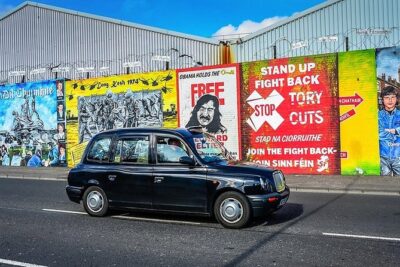
- Falls Road murals and the International Mural Wall
- The Peace Walls between Falls and Shankill
- Shankill Road and the Loyalist story
- Clonard, Bombay Street, and the cost of 1969
- Clonard Martyrs Memorial Garden
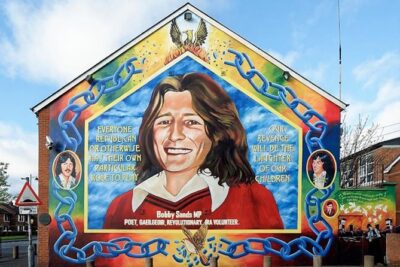
- Milltown Cemetery and Bobby Sands
- Bobby Sands mural and hunger-strike history
- The Eileen Hickey museum and former prisoners
- Divis Tower and Ballymurphy
- Price, transport, and pickup details
- Who should book this Belfast experience?
- Should you book it?
- FAQ
- How long does the tour last?
- How much does the tour cost?
- What perspective does the tour present?
- Is transportation included?
- Where is the standard pickup point?
- Is cruise ship pickup available?
- Is airport pickup available?
- Can I visit the private museum on every tour?
- Can I cancel for a full refund?
Key points to know before booking
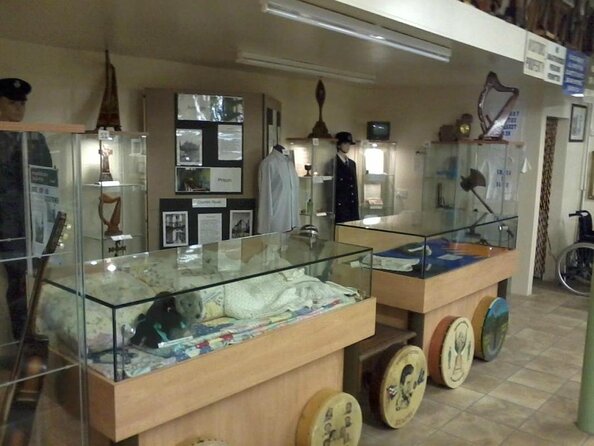
- Private access to the Eileen Hickey Irish Republican History Museum: The museum is normally open only from 10 a.m. to 2 p.m., Tuesday through Saturday, and may be replaced with a visit to Ballymurphy if closed.
- A rare Republican perspective: The tour explains the conflict, its causes, and the peace process through the history of Irish Republicanism.
- Major West Belfast sites in three hours: You visit the Falls Road, Shankill Road, Peace Walls, Milltown Cemetery, Clonard, Divis, and Ballymurphy.
- Personal and flexible guiding: Guides adjust the route and discussion to your questions, with Barry receiving especially strong praise for his detailed explanations and first-hand experience.
- Emotionally serious stops: Bobby Sands, Republican memorial gardens, hunger strikers, civilian deaths, and former prisoners are central to the visit.
- Good value for a small private group: At $255.50 per person, the price is high for three hours, but it includes private transport, hotel pickup from the central meeting point, and access to sites that are difficult to arrange alone.
Why this tour feels different from a standard Belfast city tour
Many Belfast sightseeing trips show you the best-known murals, take a few photographs, and move on. This experience spends more time on the people, groups, and events behind the images.
You travel in an air-conditioned private vehicle, with the guide handling the driving and navigation. That matters in West Belfast, where the significance of a street often depends on knowing what happened there, not simply seeing the road sign. You can ask about a mural, a memorial, a local neighborhood, or the current political situation without waiting for a large group to catch up.
The tour is also built around access. The private museum is not normally available to the general public, and the Republican memorial gardens and cemetery plots are presented as more than quick photo stops. You get explanations of names, dates, symbols, and the way memory is still shaped by the conflict.
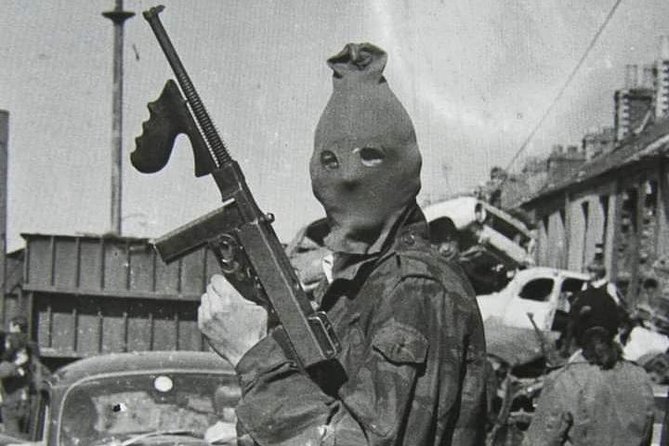
The experience is not neutral in tone. That is not a secret or a flaw hidden in the fine print. The subject is Irish Republicanism, and the guide explains the IRA’s origins, campaigns, prisoners, hunger strikes, and political aims from that side. If you want a balanced account of Republican, Loyalist, and British positions, you should pair this with a tour designed specifically around both communities.
More mural and peace wall tours in Belfast:
- Belfast’s Political Mural Taxi Tour
★ 5.0 · 1,180 reviews - Belfast Troubles Tour: Walls and Bridges
★ 5.0 · 853 reviews - Famous 1.5 hour Belfast Murals Tour
★ 5.0 · 477 reviews
Falls Road murals and the International Mural Wall
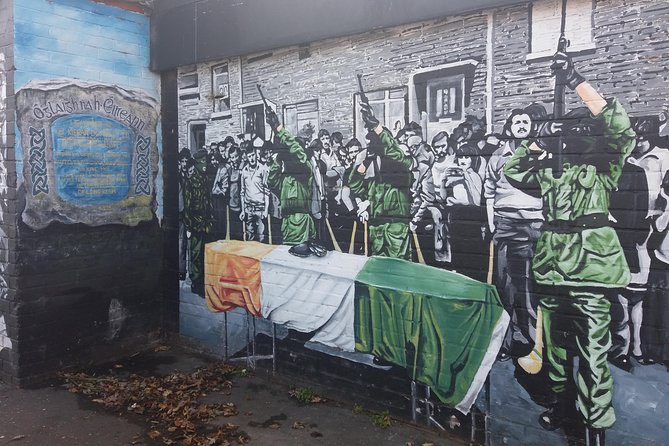
The opening stop on Divis Street introduces you to the public language of Belfast’s conflict. The International Mural Wall and nearby Falls Road murals connect local Republican themes with political causes from around the world.
Your guide explains how the modern conflict developed from the unrest of 1969 and how murals became a way to remember deaths, honor prisoners, support political causes, and make a public statement. Former prisoners painted many of the murals, which gives the artwork a direct connection to the people and organizations discussed during the tour.
The stop is scheduled for only about 10 minutes, so you should expect a focused introduction rather than a long walking session. The advantage is speed: you see an important collection of images early, then spend more time at memorials and sites that require greater explanation.
The Peace Walls between Falls and Shankill
The Peace Walls are the physical reminder that Belfast’s division did not end when the major violence declined. The barriers separate mainly Republican and Nationalist Catholic districts from mainly Loyalist and Unionist Protestant districts.
At the wall, you visit both sides and hear why the barriers were built. They began as a response to sectarian violence in 1969, when homes and streets were attacked and burned. What was meant to be temporary remained because it reduced direct clashes. Some walls even grew longer after the IRA ceasefire in 1994.
You can write your name or a message of peace on the wall. It is a small action, but it brings the subject into the present. You are not just looking at a historic structure. You are standing beside a barrier that still reflects how communities remain separated.
The famous wall between the Falls Road and Shankill Road stretches about 800 meters and reaches several levels in places. The tour also passes the largest Peace Wall in Belfast. These visits can feel repetitive if you have already taken another mural tour, but the guide’s political explanation gives the walls more meaning than a quick photograph would.
Shankill Road and the Loyalist story
The tour crosses into the Shankill Road area, the center of Ulster Loyalism. Murals here show masked men, weapons, Loyalist organizations, and symbols tied to the UDA, UFF, and UVF.
This section is important because it shows the other side of the physical divide, even though the overall tour remains Republican in outlook. Your guide explains how Loyalism developed and how these organizations participated in the conflict.
You should listen carefully here. The imagery can be stark, and the subject is not presented as simple street art. The murals are political statements tied to identity, territory, remembrance, and paramilitary history. You may take photographs, but a respectful approach is essential.
If your main interest is understanding how Loyalists viewed the conflict, this part may feel too brief. The guide discusses Loyalism, but the wider narrative returns to Republican history.
More museums in Belfast:
- Belfast Titanic Museum and Sighseeing Tour
★ 4.5 · 59 reviews - Titanic Museum and Whiskey Distillery Exploration with Tasting
★ 4.5 · 25 reviews - Belfast City Sightseeing Tour Including Titanic Museum | 6 Hours
★ 4.5 · 9 reviews - Saint Patrick Centre Exhibition experience
★ 4.5 · 33 reviews
Clonard, Bombay Street, and the cost of 1969
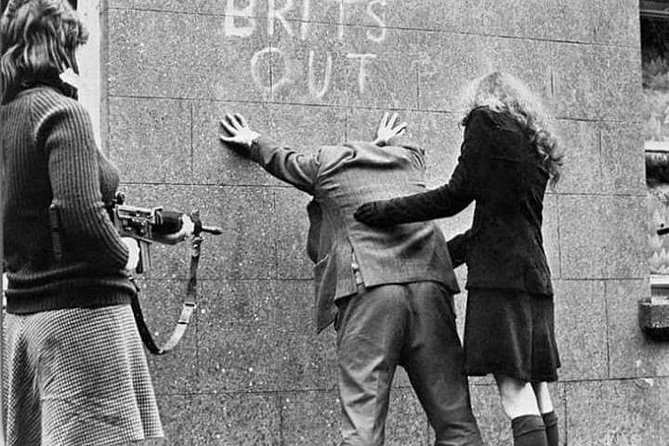
Clonard gives the tour some of its strongest local context. The area sits near the interface between the Falls and Shankill districts, and the rear of Clonard Monastery is close to Bombay Street and Cupar Street.
In August 1969, attacks forced Catholic residents from their homes, and Bombay Street was largely burned. The violence helped lead to the first Peace Walls. Hearing this while viewing the streets makes the early years of The Troubles less abstract.
Clonard Monastery also connects the political story with the work of clergy who tried to protect residents and build peace. Fathers Alec Reid and Gerry Reynolds lived and worked here. The monastery’s role is a useful reminder that the conflict was not only fought by armed groups. Priests, families, community workers, and local residents were caught in the middle.
Clonard Martyrs Memorial Garden
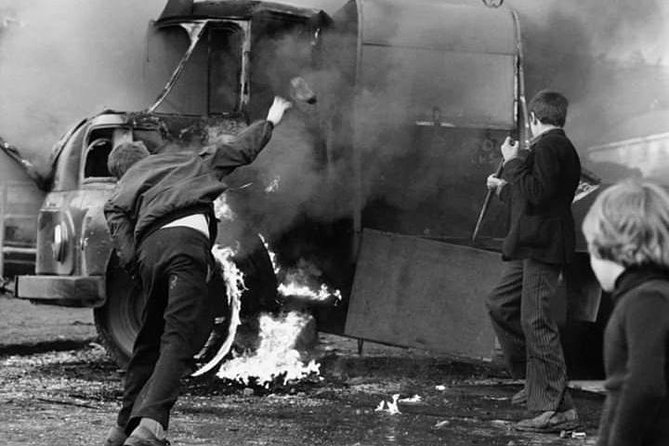
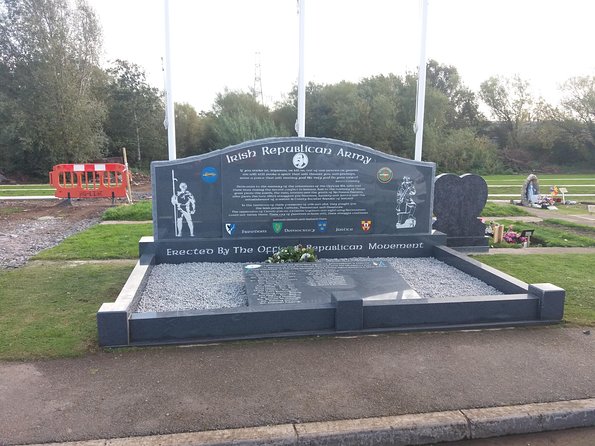
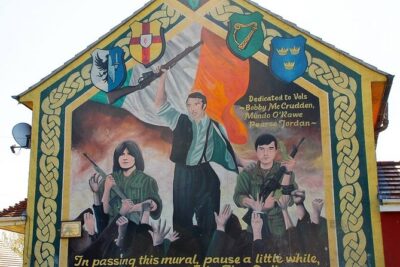
The Clonard Martyrs Memorial Garden is one of the tour’s more detailed stops. It honors Republican volunteers, civilians killed in the Greater Clonard area, and Republican prisoners who died from 1916 onward.
The entrance has black iron gates with a rising phoenix and the phrase Out the Ashes Arose the Provisionals. Inside, the garden is divided into three sections, with Celtic crosses, plaques, memorial benches, and lists of names.
You will see memorials to the C Company, Second Battalion, Belfast Brigade, along with civilians described on the plaques as victims of Loyalist and British forces. Other panels remember Republican prisoners from different decades, including the 1920s, the 1930s and 1940s, the 1956 to 1962 campaign, and 1970.
This is a Republican memorial space, and its wording reflects that. The language is direct, proud, and sometimes defiant. I would allow yourself time to read the plaques rather than treating the garden as another quick stop. The visit is scheduled for about 30 minutes, making it one of the longer and more serious parts of the tour.
Milltown Cemetery and Bobby Sands
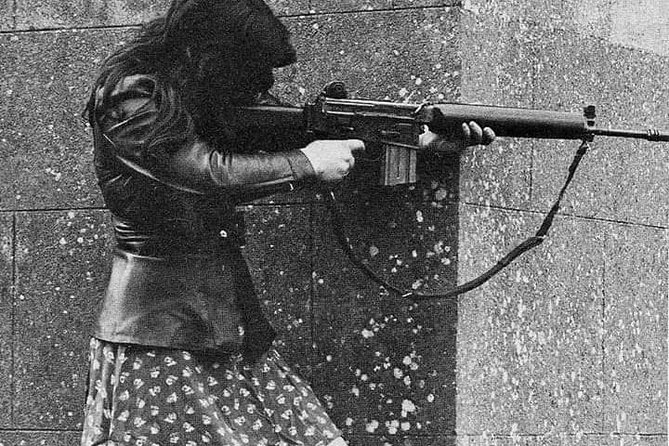
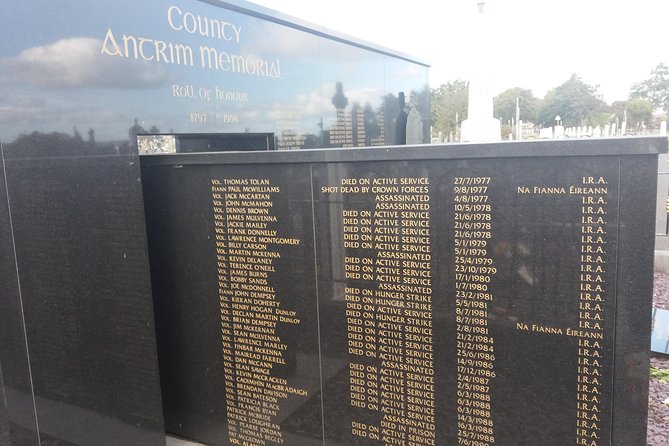
Milltown Cemetery contains several Republican plots and the graves of IRA volunteers killed during the 1920s, the 1940s Northern Campaign, and the later conflict. The National Graves Association, Belfast, cares for much of this work.
The most famous grave is that of Bobby Sands, the IRA member who died on hunger strike in 1981 while imprisoned at the Maze. He had been elected as a Member of Parliament during the hunger strike and died after 66 days.
The Republican plots include the New Republican Plot, with the remains of 77 IRA volunteers, including Máiread Farrell. The graves are marked with the Red Hand, and the cemetery offers a quiet setting for understanding how Republican communities remember their dead.
The cemetery stop lasts about 25 minutes. One caution comes from the schedule itself: this tour covers a lot, and a cemetery visit can take up a large share of the available time. If you have a family grave to visit, the guide may be able to help with a short stop. One guide even stopped at a flower shop for a couple who wanted flowers for a grave.
Bobby Sands mural and hunger-strike history
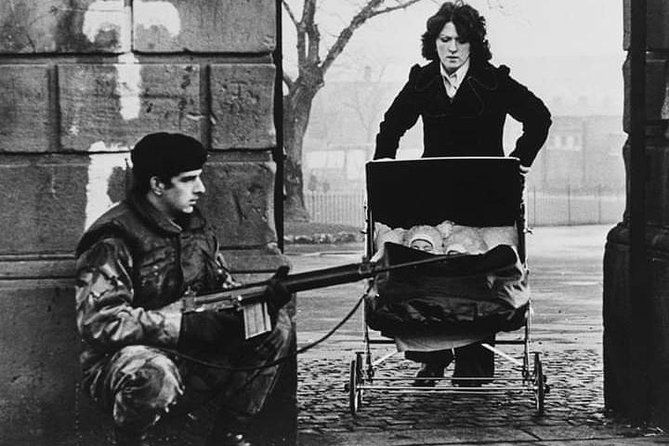
The Bobby Sands mural is one of Belfast’s most recognizable political images. Here you learn about the Blanket Protest, the Dirty Protest, and the 1981 hunger strikes.
The tour also visits the Second Battalion IRA Garden of Remembrance, associated with D Company, sometimes called The Dogs. It connects the local story to the IRA’s Belfast Brigade, which was divided into battalions covering areas such as Falls Road, Clonard, Ballymurphy, Ardoyne, the Markets, and Short Strand.
The garden includes photographs of 12 of the 22 hunger strikers. These images make the hunger strike story more personal, especially after visiting Milltown Cemetery.
You will see the Bobby Sands mural again at another point in the route, allowing for photographs and more discussion. The repeated visit may feel unnecessary to some people, but it also gives the guide time to separate the mural’s symbolic role from the details of the prison protests.
The Eileen Hickey museum and former prisoners
The private Irish Republican History Museum is the tour’s most unusual feature. It covers resistance to British rule and Irish Republican history across roughly 800 years, then brings the story into the modern conflict.
The museum includes objects connected with the conflict, including plastic and rubber bullets used by British Crown forces. You may also meet former prisoners who share personal experiences. That kind of first-hand account can make the political discussion feel immediate, but it also means the visit may be emotionally direct and strongly framed.
The museum is normally open from 10 a.m. to 2 p.m., Tuesday through Saturday. If it is closed, the tour replaces it with a visit around Ballymurphy. Confirm the museum timing when booking, especially if your available tour slot is outside those hours.
Divis Tower and Ballymurphy
Divis Tower overlooks the Falls and was used by the British Army as a sniper position and observation post until 2005. The stop also points out the names and murals connected with the first two victims of The Troubles.
In Ballymurphy, you drive through a Republican area and see murals connected with the Great Famine and local volunteers. One mural honors Jim Bryson and his Big Louie machine gun. The guide explains how such images reflect the community’s memory of resistance and armed struggle.
These are brief stops, usually five minutes each. You are mainly seeing the sites from the vehicle and stopping for photographs, rather than taking a long walk. That keeps the route moving but limits the time available for close inspection.
Price, transport, and pickup details
The cost is $255.50 per person for about three hours. That is not a cheap sightseeing ride, especially for a solo visitor, but the value improves if two or more people share the private experience and want a serious political history tour.
The price includes private transportation, an air-conditioned vehicle, and pickup from the central meeting point at the Leonardo Hotel. The private setup is the main reason to pay more. You can ask questions, request more time at a site, and sometimes adjust the route around your interests.
Pickup from other places can cost extra. The listed additions include £10 for some central locations and £25 each way for cruise ship pickup and drop-off. Airport pickup is not offered. A luxury Mercedes-Benz V-Class upgrade with electric doors, leather reclining seats, and privacy glass may be available for an extra £25.
The tour is offered in English, includes a mobile ticket, and is suitable for most participants. Group discounts may be available. Free cancellation applies when you cancel at least 24 hours before the start time.
Who should book this Belfast experience?
I would choose this tour if you want a Republican account of The Troubles, prefer a private vehicle to a large group, and care more about political history than general sightseeing. It also suits people who have already seen the city center and want to understand West Belfast at street level.
It is a strong choice for visitors interested in Bobby Sands, Republican prisoners, murals, memorials, the peace process, and the continuing division between communities. Guides such as Barry are praised for offering reading and film suggestions after the tour, which is useful if the subject leads you to further research.
I would not make it your only Belfast history experience if you need a carefully balanced account of all sides. The tour’s perspective is plainly Republican, and one guest felt that Loyalist arguments received too little attention. That criticism is fair as a description of the format, even though the guide’s stated purpose is to explain the Republican side.
Should you book it?
Book this tour if you want a close, personal, and unapologetically Republican account of Belfast’s conflict. The private museum, Milltown Cemetery, Clonard memorials, Peace Walls, and first-hand guide stories offer far more than a quick mural drive.
Skip it, or pair it with a more even-handed tour, if you want equal treatment of Republican, Loyalist, and British views. At $255.50 per person, the price demands a focused interest in the subject. For the right audience, the private access and personal guiding make it a worthwhile use of three hours.
FAQ
How long does the tour last?
The tour lasts approximately three hours.
How much does the tour cost?
The listed price is $255.50 per person.
What perspective does the tour present?
The tour presents The Troubles and Irish Republican history from an Irish Republican perspective. It discusses Loyalist and British participation, but it is not designed as an equal account of both sides.
Is transportation included?
Yes. Private transportation in an air-conditioned vehicle is included.
Where is the standard pickup point?
Free pickup is offered from the Leonardo Hotel, described as the central meeting location.
Is cruise ship pickup available?
Yes, but cruise ship pickup costs £25 each way and is paid directly to the guide by cash or card.
Is airport pickup available?
No. The tour does not provide airport pickup or drop-off.
Can I visit the private museum on every tour?
The Irish Republican History Museum is normally open from 10 a.m. to 2 p.m., Tuesday through Saturday. If it is closed, the tour visits Ballymurphy instead.
Can I cancel for a full refund?
Yes, if you cancel at least 24 hours before the experience starts. Cancellations or changes made less than 24 hours before the start time are not refunded or accepted.
Just added around Belfast
- Belfast City Airport (BHD) to Belfast Accommodation – Arrival Private Transfer★ 5.0 · 3 reviews
- Game of Thrones scene location inc Giants causeway from Belfast★ 5.0 · 3 reviews
- Belfast history of terror & mural 1 hr express private taxi tour★ 5.0 · 3 reviews
- Belfast Private Walking Tour with a Local★ 3.0 · 3 reviews
- Experience the Antrim Coast and the Land of Giants – Private Tour★ 5.0 · 3 reviews
- Private Coast Tour in Belfast★ 5.0 · 3 reviews
- Giants Causeway Tour From Belfast including Game of thrones sites★ 5.0 · 3 reviews
- Belfast to Dublin Transfer★ 5.0 · 3 reviews
Political & Mural Tours, compared.
Belfast Political Tour-Conflicting Stories Walking Tour
Read our review →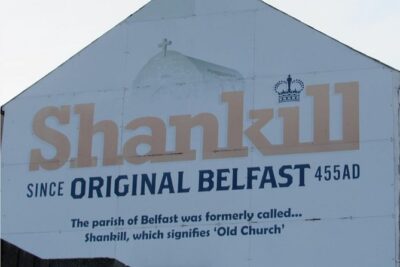
2 Hour Private Belfast Taxi Cab Tour of Troubles & Peace walls
Read our review →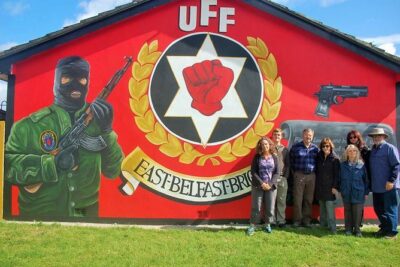
2 hours Belfast Original Drivers The Troubles Black Taxi Tour
Read our review →Browse the lists this tour appears in