
Reviewed · CITY TOURS
Belfast Official Private City Tour
Belfast tells its story on walls. This private city tour is interesting because it joins the city’s political murals, peace lines, memorials, and major sights into one guided route, rather than leaving you to piece together the story on foot. I like the private vehicle, which saves time between neighborhoods, and I like the chance to ask direct questions about the Troubles. The main drawback is the listed price of $615.91 per person, which is a serious outlay unless you are sharing the cost with a larger private group.
The tour lasts roughly two hours and 40 minutes to three hours. Guide Barry has earned particular praise for his friendly, detailed explanations, while Allan is also associated with a well-regarded Belfast and Giant’s Causeway experience. You will see much more than murals, but this is first and foremost a history tour, and some stops deal with violence, death, imprisonment, and political division.
In This Review
- Key points before you book
- Why a private vehicle matters in Belfast
- Divis Tower and the first look at west Belfast
- The International Wall and Falls Road murals
- The Peace Wall and a message of hope
- Bobby Sands and the Clonard memorials
- Shankill Road and the loyalist story
- Belfast Castle and views from Cave Hill
- Three city-center landmarks in quick succession
- St Peter’s Cathedral and the wider Belfast story
- The guide makes or breaks this experience
- Is $615.91 per person good value?
- Who should book this private Belfast tour?
- Should you book it?
- FAQ
- How long does the Belfast Official Private City Tour last?
- Is hotel pickup available?
- Is this a private tour?
- What political sites are included?
- Can I write a message on the Peace Wall?
- Is transportation included?
- What is the cancellation policy?
Key points before you book
- The Falls Road, Shankill Road, and Peace Wall form the tour’s core: You get context for both republican and loyalist communities, not just a quick look at painted walls.
- A private car lets you cover Belfast efficiently: Hotel pickup, drop-off, and in-tour transfers save time and energy between west Belfast, Cave Hill, and the city center.
- Barry is a particularly praised guide: His clear narration covers Belfast, Northern Ireland, and Irish and British history.
- Belfast Castle adds a welcome change of pace: The 30-minute stop brings views over Belfast and Belfast Lough after the more serious political sites.
- You can leave a message at the Peace Wall: This gives the stop a personal touch, though the wall remains a symbol of division rather than a simple feel-good attraction.
- The price needs careful thought: The tour offers convenience and personal attention, but it is expensive for a three-hour city outing.
Why a private vehicle matters in Belfast
Belfast’s main political sights are spread across several parts of the city. The murals and peace lines are concentrated around west Belfast, while Belfast Castle sits above the city and the Albert Memorial Clock, Big Fish, and Beacon of Hope are in or near the center.
On foot, you could visit some of these areas, but you would spend much of your limited time getting from one to another. This tour uses private transportation and an air-conditioned vehicle, with hotel pickup and drop-off offered. Your driver handles navigation, so you can listen to the guide and watch the city rather than worry about directions.
The private format is most useful if you want to ask questions. The Troubles are not a subject that fits neatly into a ten-minute speech. You may want clarification about republican and loyalist symbols, the role of the peace lines, or the difference between a memorial and a political statement. With only your own group present, the guide can adjust the explanation to your interests.
Pickup details matter. Hotel pickup is offered, but airport transfers cost extra. Train and bus station pickup is limited to central Belfast, with additional charges outside the central area. Confirm the pickup point and any extra transfer fee before paying.
A few more Belfast trips worth weighing up
- Private Black Taxi Belfast City Tour
★ 5.0 · 2,188 reviews - 2 Hour Private Belfast Taxi Cab Tour of Troubles & Peace walls
★ 5.0 · 240 reviews - Private Political History & Murals Tour Belfast
★ 5.0 · 182 reviews
Divis Tower and the first look at west Belfast
The tour begins at Divis Tower, near the interface between Falls Road and Shankill Road. The stop is brief, around ten minutes, but its location is important. This is an area where the city’s political and religious divisions have been physically close for decades.
Divis Tower helps you understand the geography before the murals and peace wall begin. The tour does not treat Belfast’s conflict as an abstract national story. It places you in the streets where communities lived beside one another, often separated by barriers and competing identities.
The short stop means you should not expect a long visit inside any building. Its value comes from the guide’s explanation and the position of the tower near the old interface.
The International Wall and Falls Road murals
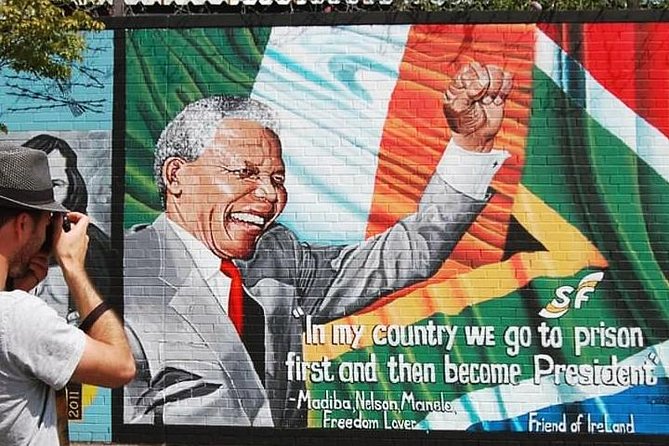
At the International Mural Wall on Divis Street, you spend about 20 minutes looking at politically charged murals and street art. The artwork includes pieces connected with former prisoners of war and international political causes.
This is one of the tour’s strongest sections because the murals are not presented as simple decoration. They are public statements. Some express Irish republican ideas, while others connect Belfast’s political struggle with conflicts and causes beyond Northern Ireland.
Your guide’s narration matters here. Without context, you may notice colors, portraits, slogans, and symbols but miss why the artwork was painted or how different groups use public space to remember the past. The tour aims to explain the conflict that lasted for more than 30 years, including the competing accounts held by the communities involved.
You should allow yourself time to look closely, but remember that the murals can be emotionally charged. This is not a light street-art walk. It asks you to think about imprisonment, identity, loss, and political loyalty.
The Peace Wall and a message of hope
The Peace Wall, also called a peace line, remains one of Belfast’s most recognizable symbols. You spend about 20 minutes here, learning why the barrier still exists and how the two communities remain divided.
The name can sound reassuring, but the reality is more complicated. A peace wall is also a physical reminder that peace has not erased separation. Your guide can explain the history behind the barrier and the role it has played in reducing contact between opposing communities.
You are invited to write your name and leave a message of peace and hope. That gives the stop a personal element, but it should not distract from the wall’s harder meaning. You are adding a small note to a structure created because people once feared what might happen on the other side.
This stop is especially valuable if you want more than a photograph. The tour gives you a chance to connect the visible wall with Northern Ireland’s wider political story.
A completely different sort of day out of Belfast:
- Titanic Belfast Entrance Ticket: Titanic Visitor Experience Including SS Nomadic
★ 4.5 · 3,698 reviews - Cab Tours Belfast Famous Black Taxi Tours
★ 5.0 · 3,633 reviews - A History of Terror – Belfast City Centre Walking Tour
★ 5.0 · 2,883 reviews - Game of Thrones and Giant’s Causeway Full-Day Tour from Belfast
★ 5.0 · 2,291 reviews
Bobby Sands and the Clonard memorials
The Bobby Sands mural receives a ten-minute stop. It honors the IRA volunteer who died on hunger strike in 1981 and is one of Belfast’s most famous political murals.
The mural is visually striking, but its subject requires care. Bobby Sands remains a deeply political figure, and the mural reflects a republican interpretation of the conflict. Your guide can help place the hunger strike in the wider story of imprisonment, political status, and the struggle over how republican prisoners were treated.
Next comes Clonard Monastery, built in 1897 by the Naughton brothers. The large Roman Catholic monastery sits in the area between the Falls and Shankill communities, close to the peace line. Its location gives it significance beyond its architecture.
The nearby Clonard Martyrs Memorial Garden focuses on the beginning of the present conflict in 1969. It commemorates republican volunteers from C Company, 2nd Battalion, Belfast Brigade, civilian casualties from the Greater Clonard area, and deceased republican prisoners from the area between 1916 and 1970.
This is one of the more solemn parts of the route. You will encounter a memorial shaped by one community’s point of view, so listen carefully to the wording and ask questions if you want a fuller picture. The tour’s private nature helps here, since you can pause and discuss difficult subjects without holding up a larger group.
Shankill Road and the loyalist story
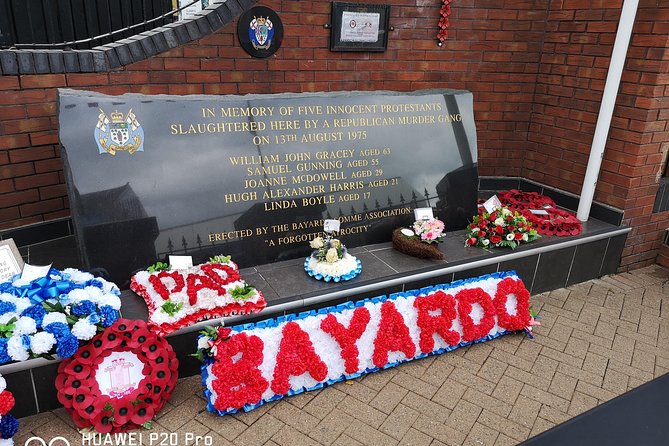
The tour then crosses to Shankill Road for about 20 minutes. You see the King William mural, loyalist murals, and memorials linked with the Ulster Defence Association, Ulster Freedom Fighters, and Ulster Volunteer Force.
This is an important balance in the route. The earlier stops focus heavily on republican areas and symbols. Shankill Road shows the loyalist side, including its attachment to the United Kingdom and the British Crown, along with memorials to those killed in the conflict.
The guide’s job here is not to tell you which side to support. It is to explain how loyalism developed, why murals became so important, and how paramilitary organizations shaped local identity. The King William imagery connects the area with the Protestant and unionist tradition.
You may find the back-and-forth between Falls Road and Shankill Road especially useful. Seeing both communities in a single morning makes it harder to reduce the Troubles to a simple good-versus-bad story. The tour is strongest when it lets you compare the symbols, memorials, and language used by each side.
Belfast Castle and views from Cave Hill
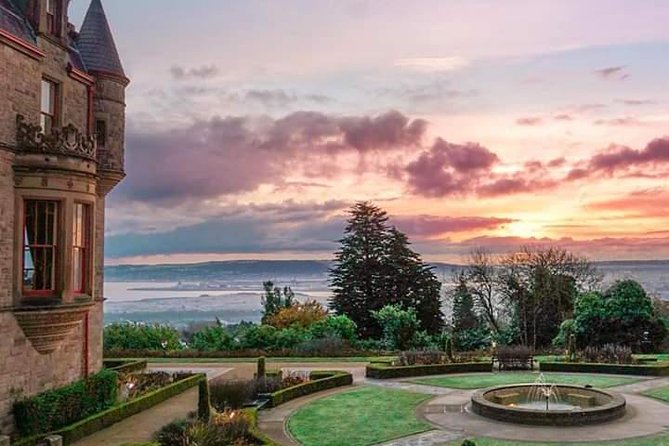
Belfast Castle is the route’s longest stop, at about 30 minutes. The castle sits on the slopes of Cavehill Country Park, around 400 feet above sea level, with broad views toward Belfast, Belfast Lough, and the surrounding area.
The first Belfast Castle was built by the Normans in the late 12th century in the city center. The building you see today is connected with a later period, but the site gives the tour a useful change of subject after the political murals and memorial gardens.
I like the placement of this stop. You have spent much of the tour examining streets marked by division. From the castle, you get a wider view of Belfast and a chance to consider the city as a whole.
The 30-minute visit is enough for the setting and views, but not an extended castle visit. Treat it as a scenic stop with historical context rather than a full museum tour. If weather is poor, the views may be less rewarding, though the castle still breaks up the itinerary.
Three city-center landmarks in quick succession
The Albert Memorial Clock Tower is a ten-minute stop at Queen’s Square. Completed in 1869, it is one of Belfast’s best-known landmarks. Its location near the city center makes it easy to combine with the next waterfront sights.
You then see the Big Fish, also called the Salmon of Knowledge. This 10-meter ceramic mosaic sculpture was created by John Kindness in 1999 and installed on Donegall Quay near the Lagan Lookout and Custom House.
The Big Fish is a lighter stop after the serious political sites. Its ceramic panels carry printed images and text, and the sculpture has become one of Belfast’s most recognizable pieces of public art. Ten minutes is enough for photographs and a quick look.
The final listed city-center sight is the Beacon of Hope, also called the Thanksgiving Square Beacon. This 19.5-meter metal sculpture by Andy Scott was built in 2007 at a cost of £300,000. It is also known by several local nicknames, including Nuala with the Hula, the Belle on the Ball, the Thing with the Ring, and the Angel of Thanksgiving.
These names are part of the fun. Belfast has a habit of giving public art its own unofficial identity. The Beacon is a good example of how the city’s modern character sits alongside its older monuments and conflict memorials.
St Peter’s Cathedral and the wider Belfast story
St Peter’s Cathedral is a Roman Catholic cathedral for the Diocese of Down and Connor. It is located in the Divis Street area of the Falls Road, and construction began in the 1860s.
The ten-minute stop gives you another window into the religious and cultural identity of west Belfast. Its place near the Falls Road makes it a natural companion to the republican murals and Clonard sites, though it also reminds you that the area is more than a collection of political images.
Do not expect a lengthy interior visit based on the stated timing. The cathedral works best as a brief landmark stop within the wider story of the district.
The guide makes or breaks this experience
A private history tour depends heavily on the guide. Barry is the name most closely associated with the positive feedback attached to this experience. He is described as friendly, informative, and strong on both local history and the wider story of Ireland, Northern Ireland, and Britain.
One particularly useful feature is the way the narration links the Troubles with older political events. You are not simply shown a mural and given a date. The aim is to explain how historic loyalties, religious identity, British and Irish politics, imprisonment, and community memory shaped the modern city.
Allan is also associated with a highly praised Belfast and Giant’s Causeway outing. If your booking allows you to confirm the guide, it is worth asking who will lead the tour and what language or subject areas you most want covered.
Because this is a private tour, you can ask for more detail on the subjects that interest you. You can also tell the guide if you prefer a broader city introduction rather than a close focus on the Troubles. The advertised route is fixed enough to cover the main sites, but private touring should allow some conversation around them.
Is $615.91 per person good value?
At $615.91 per person, this is not a budget sightseeing tour. The value depends on group size, since the private vehicle and guide cost are easier to justify when shared among several people.
You are paying for more than entry tickets. The listed stops are generally viewed from public areas, and no major paid attraction is highlighted. Your cost covers private transportation, hotel pickup and drop-off, an air-conditioned vehicle, and a professional local guide who can explain a sensitive subject in person.
I would consider it good value for a family or small private group that wants efficient transportation and a serious introduction to Belfast. I would find it harder to justify for one person or a couple focused mainly on famous landmarks, since many city-center sights can be seen independently.
The tour also saves time. In less than three hours, you reach west Belfast, Cave Hill, the waterfront, St Peter’s Cathedral, and the central public-art sites. If you have only a short stay in Belfast, that coverage has real worth.
The price does not include a guide tip. A luxury Mercedes-Benz V-Class upgrade may be available for £30, and airport transfers cost extra. Pickup at train and bus stations is limited to central Belfast, so check those costs before booking.
Who should book this private Belfast tour?
I would recommend it to first-time visitors who want a guided explanation of the Troubles and do not want to navigate politically sensitive areas alone. It also suits families, older visitors, and anyone who values door-to-door transport over a long walk or public bus ride.
It is a strong choice if you want to compare republican and loyalist perspectives in one outing. The route does not confine itself to one mural district. It moves between Falls Road, Clonard, Shankill Road, the Peace Wall, Belfast Castle, and the city center.
You may prefer another option if you want a slow art tour, a long castle visit, or extensive time inside churches. The itinerary moves briskly, with most stops lasting 10 to 20 minutes. You get breadth and explanation, not long, unhurried visits at each location.
The subject matter also deserves honest consideration. If you want only cheerful sightseeing, the memorial gardens, Bobby Sands mural, and peace lines may feel heavy. If you want to understand why Belfast looks and feels the way it does, those are precisely the places that make the tour worthwhile.
Should you book it?
Book this tour if you want a private, efficient introduction to Belfast’s divided past, with a guide who can explain both republican and loyalist areas and take you beyond the city center. Barry’s friendly, well-informed style is a strong reason to feel confident about the experience, though you should confirm the guide and pickup details.
Skip it if the $615.91 per-person price is outside your budget or if you are happy using public transport and exploring murals independently. The tour’s best value comes from personal narration, private transfers, and the ability to connect many scattered sites in one short outing.
Free cancellation is available if you cancel at least 24 hours before the start time. Changes or cancellations inside that window are not accepted for a refund.
FAQ
How long does the Belfast Official Private City Tour last?
The tour lasts approximately two hours and 40 minutes to three hours.
Is hotel pickup available?
Yes. Round-trip hotel pickup and drop-off are offered. Airport transfers cost extra, and train or bus station pickup is limited to central Belfast with additional charges outside central Belfast.
Is this a private tour?
Yes. Only your group participates in the activity.
What political sites are included?
The route includes Divis Tower, the International Mural Wall on Divis Street, Falls Road murals, the Peace Wall, the Bobby Sands mural, Clonard Monastery, Clonard Martyrs Memorial Garden, and loyalist murals and memorials on Shankill Road.
Can I write a message on the Peace Wall?
Yes. You can write your name and leave a message of peace and hope.
Is transportation included?
Yes. Private transportation in an air-conditioned vehicle is included, along with in-tour transfers.
What is the cancellation policy?
You can cancel at least 24 hours before the experience starts for a full refund. Cancellations or changes made less than 24 hours before the start time are not accepted for a refund.
Just added around Belfast
- Belfast City Airport (BHD) to Belfast Accommodation – Arrival Private Transfer★ 5.0 · 3 reviews
- Belfast history of terror & mural 1 hr express private taxi tour★ 5.0 · 3 reviews
- Game of Thrones scene location inc Giants causeway from Belfast★ 5.0 · 3 reviews
- Belfast Private Walking Tour with a Local★ 3.0 · 3 reviews
- Experience the Antrim Coast and the Land of Giants – Private Tour★ 5.0 · 3 reviews
- Giants Causeway Tour From Belfast including Game of thrones sites★ 5.0 · 3 reviews
- Belfast to Dublin Transfer★ 5.0 · 3 reviews
- Private Coast Tour in Belfast★ 5.0 · 3 reviews
City Tours, compared.
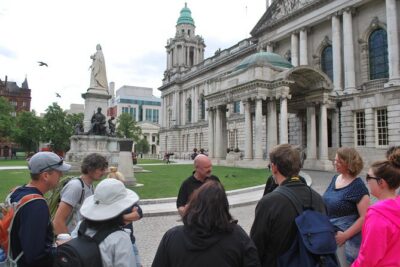
A History of Terror – Belfast City Centre Walking Tour
Read our review →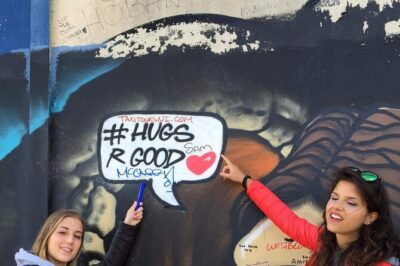
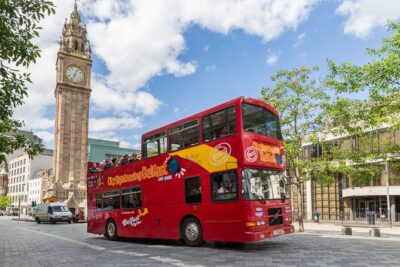
City Sightseeing Belfast Hop-On Hop-Off Bus Tour
Read our review →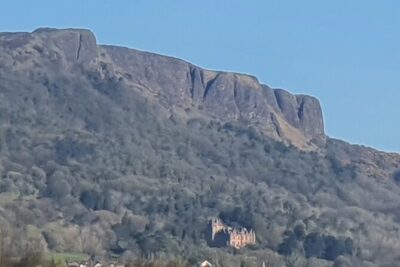
Belfast Eclectic Walking City Center Experience, The Marti Way
Read our review →
Shore Excursion from Belfast: Including Giants Causeway and Belfast City.
Read our review →
Giant’s Causeway and Belfast City Murals Tour inc Game of Thrones Dark Hedges
Read our review →
World Famous Belfast City Centre Black Cab/Taxi Tour 2 Hours
Read our review →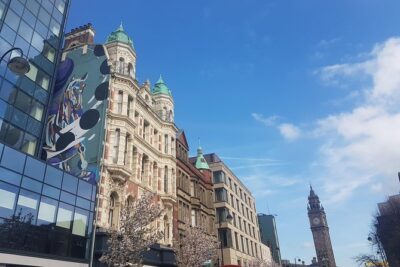
The Real Eclectic Belfast City Walking Tour/Experience.
Read our review →Browse the lists this tour appears in