
Reviewed · BLACK TAXI TOURS
Award Winning Express 2 Hours Belfast Black Taxi/Cab tours
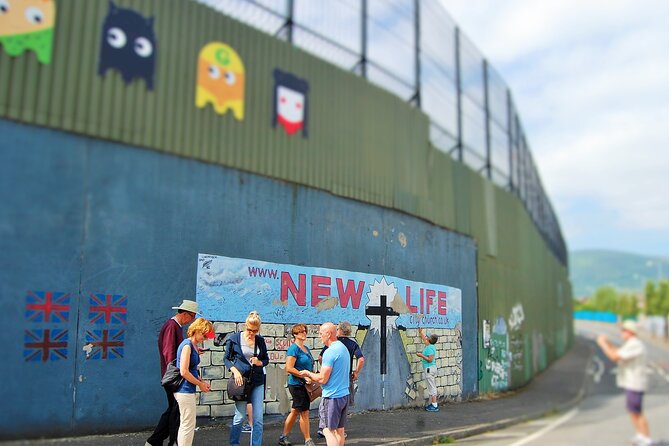
The walls here tell Belfast’s story. This private black cab tour gives you two things I value: a local guide’s personal view of the Troubles and convenient hotel pickup within 1 kilometre of Belfast City Hall. I also like the flexible start time and the chance to see major murals and Peace Wall sites in one compact outing. The main drawback is its short length, since two hours allows only a quick look at each place.
You should also plan for extra costs if your hotel sits outside the free pickup zone. Cruise passengers face a £25 British pound surcharge each way, paid in cash to the guide, so the advertised price is not the full cost for everyone.
In This Review
- Key things to know before booking
- Why a black cab is a useful way to see Belfast
- Shankill Road and loyalist Belfast
- Belfast’s old cab transport story
- Divis Street and the international mural wall
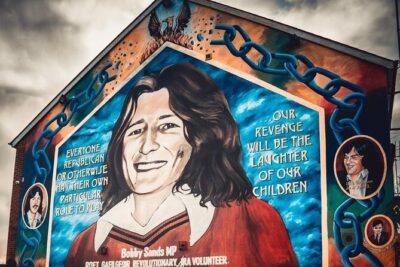
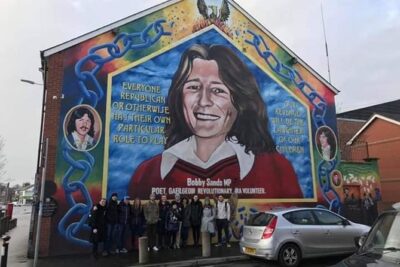
- The Bobby Sands mural and republican memory
- The Peace Wall and Belfast’s unfinished peace
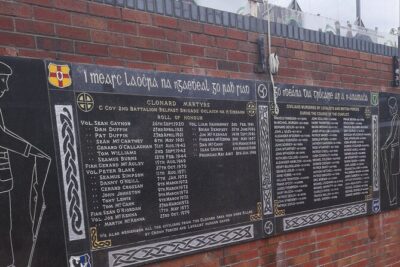
- Clonard Monastery and the road toward agreement
- How personal experience changes the story
- Private transport, timing, and pickup details
- Is $109.62 good value for two hours?
- Who should book this black cab tour?
- FAQ
- How long is the Belfast black cab tour?
- What is the price of the tour?
- Is hotel pickup included?
- Is there an extra charge outside the central pickup zone?
- Does cruise port pickup cost extra?
- Is this a private tour?
- What language is the tour offered in?
- What places are included on the route?
- Can I cancel for a full refund?
- Should you book it?
Key things to know before booking
- Personal accounts shape the tour: The guide can explain the conflict through direct local experience, not only dates and political labels.
- Six important stops fit into two hours: You visit Shankill Road, Divis Street, the Bobby Sands mural, the Peace Wall, Belfast city sites, and Clonard Monastery.
- It is a private cab tour: Only your group participates, giving you more room to ask questions and adjust the pace.
- Pickup is simple in central Belfast: Hotel pickup and drop-off are free within a 1 kilometre radius of Belfast City Hall.
- The tone is serious but hopeful: Expect difficult stories about violence, followed by discussion of peace, acceptance, and a more inclusive future.
- Book ahead: This experience is often reserved about 34 days before the date, and the tour needs a minimum number of participants to operate.
Why a black cab is a useful way to see Belfast
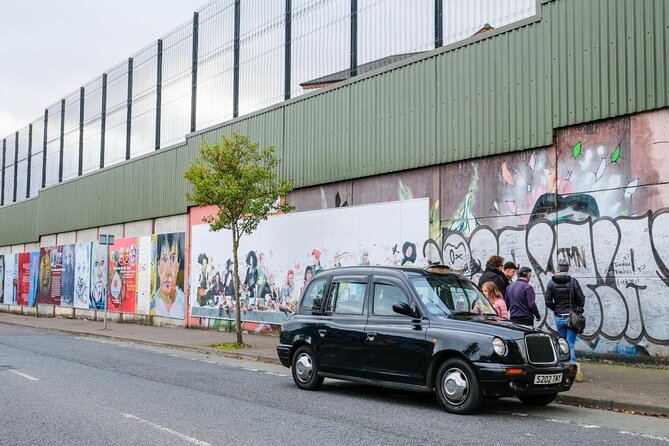
Belfast’s political story is written across its streets. Murals, flags, memorials, walls, and buildings still mark the line between communities. A private taxi lets you move between these places quickly, while the guide explains what you are seeing as you go.
I like this format for a first visit because you are not left trying to decode a mural from a guidebook. The cab takes you to areas that may feel confusing without local context, and the guide can explain the language used by both loyalist and republican communities.
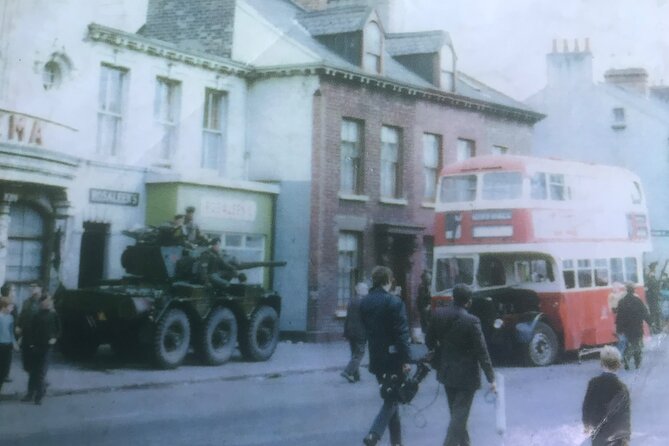
This is not a light sightseeing ride. The subject is the Troubles, including deaths, paramilitary groups, imprisonment, street fighting, and the long effort to reach peace. You may find parts of the tour somber. That seriousness is useful, but it means this experience is best suited to people who want history and honest discussion rather than a cheerful city overview.
The tour lasts about two hours. That is enough to form a clear picture of Belfast’s divided past, but not enough for long visits at every stop. You will spend much of the time moving between locations, with short periods outside the cab to see murals and walls.
More black taxi tours in Belfast:
- Cab Tours Belfast Famous Black Taxi Tours
★ 5.0 · 3,633 reviews - Private Black Taxi Belfast City Tour
★ 5.0 · 2,188 reviews - Belfast’s Political Mural Taxi Tour
★ 5.0 · 1,180 reviews
Shankill Road and loyalist Belfast
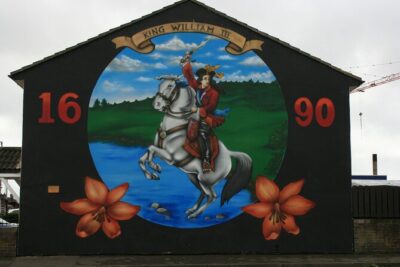
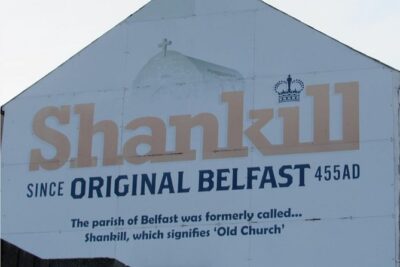
The tour begins at Shankill Road, one of Belfast’s best-known loyalist districts. Its walls carry murals connected to British identity, local memory, and the paramilitary past of the area.
You will hear about the UDA and UVF, groups linked to loyalist violence during the Troubles. The guide also explains how the Shankill community developed its own identity and how events on this road affected daily life.
The planned stop lasts about 30 minutes, making it the longest visit on the route. That gives you time to look at the murals rather than simply passing them through a taxi window. You may also hear about the large bonfires associated with loyalist celebrations and community traditions.
This stop requires some care in how you look and listen. The murals are not just colorful street art. They can honor people, defend political beliefs, mark community territory, or recall painful events. I recommend asking your guide about the meaning behind specific images instead of making assumptions from the artwork alone.
Belfast’s old cab transport story
A shorter stop in Belfast focuses on the city’s black taxi drivers and the transport services they provided during periods when government transport was refused or unavailable to parts of the community.
You will hear about the drivers who supplied transport to their neighborhoods and about the eight drivers who lost their lives. This adds a social angle to the political story. The conflict was not only fought by armed groups. It affected workers, families, passengers, shops, schools, and ordinary movement around the city.
The guide also connects Belfast’s local story with roughly 800 years of Irish and British history. That broad time frame gives you useful background, though the stop itself lasts only about 10 minutes. If you want a detailed account of medieval or early modern Belfast, this tour will not provide it. The historical overview is there to help you understand the modern conflict.
Divis Street and the international mural wall
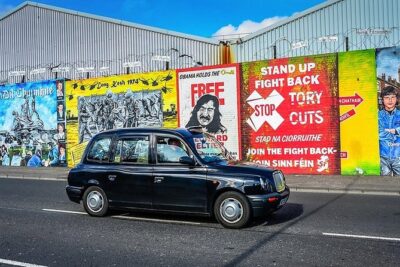
The route continues to Divis Street, where you see the former Divis flats and an international mural wall. The murals refer to causes and communities supported by republican Belfast, including Palestine, the Kurds, and Cuba.
This is one of the best places to see how local politics connect with events far beyond Northern Ireland. The wall is not limited to a single Belfast issue. It reflects solidarity with other groups that republican communities identify with, and it shows how public art can serve as political speech.
The visit is scheduled for about 20 minutes. That should give you time to view the murals and hear their basic context. Because the images can change over time, your guide’s explanation matters more than any fixed list of paintings.
The former Divis flats also help you picture the built environment in which many people lived through the Troubles. You are not simply looking at isolated artwork. You are seeing political messages placed within a real residential area, surrounded by the streets and buildings that shaped community life.
A few more Belfast trips worth weighing up
- 2 Hour Private Belfast Taxi Cab Tour of Troubles & Peace walls
★ 5.0 · 240 reviews - 2 hours Belfast Original Drivers The Troubles Black Taxi Tour
★ 5.0 · 227 reviews - World Famous Belfast City Centre Black Cab/Taxi Tour 2 Hours
★ 4.5 · 177 reviews - Original Private Belfast Troubles and Peace Cab/Taxi Tour 2 Hours
★ 5.0 · 90 reviews
The Bobby Sands mural and republican memory
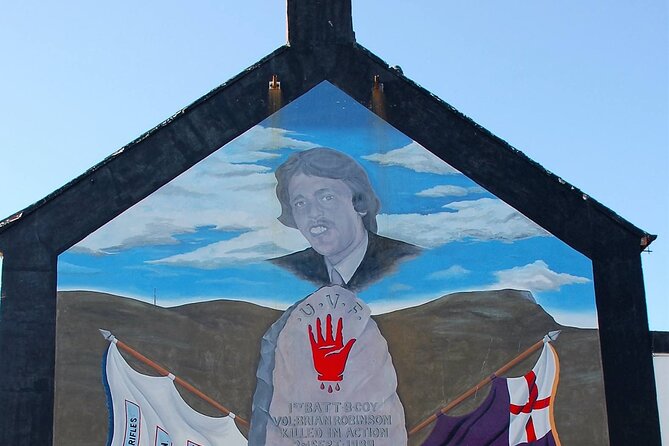
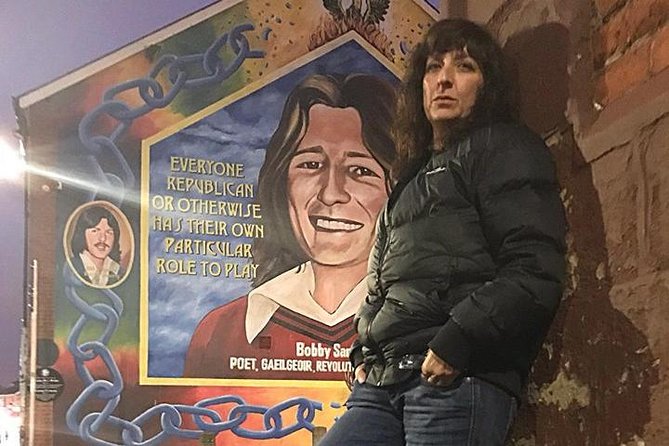
The Bobby Sands mural is one of Belfast’s most recognizable political images. It honors Bobby Sands, an IRA member who died during the 1981 hunger strike while imprisoned.
At this stop, the guide explains the conflict between the IRA and the British Army, as well as the origins of the Provisional IRA, often called the PIRA. You will also hear about the republican community’s view of the struggle and the role of this part of Belfast in that story.
The mural is visually striking, but the surrounding subject is difficult. It touches on imprisonment, hunger strikes, death, political identity, and the question of whether armed action can be justified. A good guide should help you understand why the mural matters to local people without asking you to adopt its political message.
The planned stop lasts around 20 minutes. That is enough for a focused explanation and a closer look at the artwork. If you want to explore every political argument surrounding Bobby Sands, you will need additional reading or a longer specialist tour.
The Peace Wall and Belfast’s unfinished peace
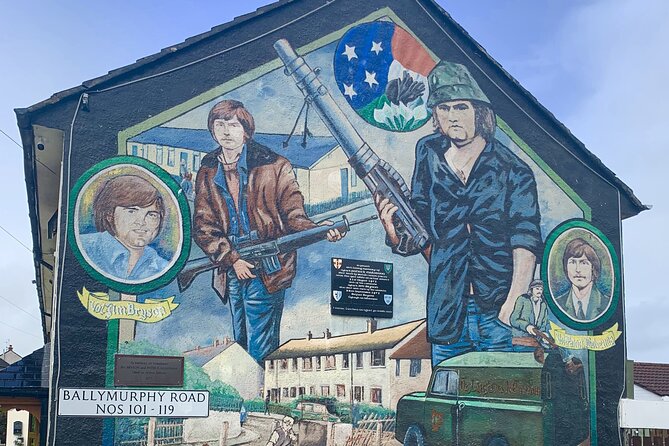
The Peace Wall is the route’s clearest physical reminder of separation. These walls divide loyalist and republican communities in parts of Belfast, and some stretch through areas where people still live close to one another.
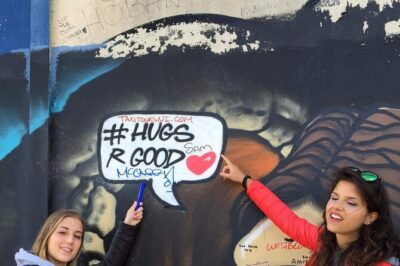
You can write a message for peace beside names and messages associated with public figures such as President Clinton, Lady Gaga, and Morgan Freeman. This small act gives the stop a more personal feel. You are not only hearing about an agreement made by politicians. You are considering what peace means to people who grew up beside division.
The name Peace Wall can sound reassuring, but the walls also show that peace did not erase every boundary. Their presence raises an important question: can a barrier protect communities while also keeping them apart? The guide can place that question within Belfast’s current life.
This stop lasts about 20 minutes. I would give it your full attention, even if you have already seen photographs of the wall. The scale and position of the barriers make more sense when you are standing beside them.
Clonard Monastery and the road toward agreement
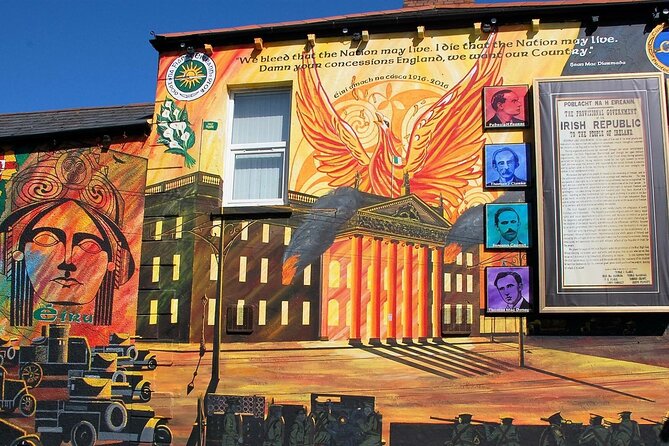
Clonard Monastery provides a quieter ending. The building is described as an impressive example of craftsmanship, but its political importance is even greater for this tour.
The monastery is associated with the first secret talks between Gerry Adams and John Hume, discussions that helped begin the peace process. Those meetings represent a change in method: conversation began to replace some of the violence and refusal that had marked earlier decades.
The stop lasts about 20 minutes, giving you time to consider the connection between faith, architecture, politics, and peace. The monastery is not presented only as a religious building. It becomes part of the story of how private conversations can lead toward public change.
Ending here works well. After seeing murals linked to armed conflict and visiting walls built to separate communities, you finish with a place connected to dialogue. The result is serious, but not without hope.
How personal experience changes the story
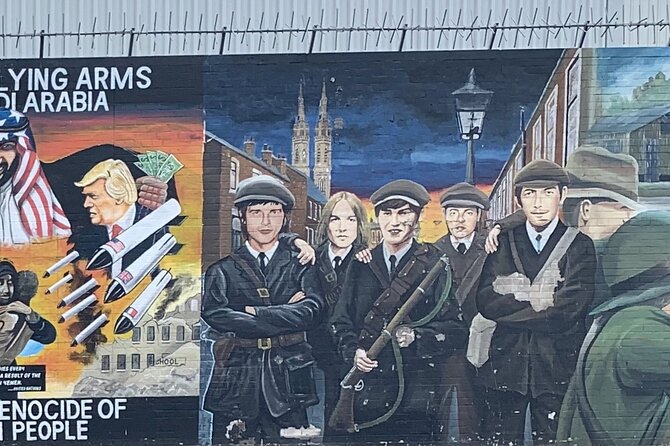
The most praised feature of this tour is the guide’s personal connection to Belfast’s past. You are not only given a sequence of dates and group names. The guide can speak about how the conflict affected everyday life and how its effects remain part of local experience.
That makes the tour more human. The discussion can include mothers, children, community identity, and hopes for a more accepting future. The strongest moments may come when the guide explains how people lived with fear, division, and uncertainty rather than simply listing incidents.
The personal approach also requires respectful listening. You may hear views that are painful, political, or different from your own. The value lies in understanding how communities remember the same city in different ways.
The tone is described as somber, informative, hopeful, and personal. Those are useful expectations. You should not book this as a quick photo trip with a few colorful murals. Book it if you want the guide to help you connect the images on the walls with the people and decisions behind them.
Private transport, timing, and pickup details
A private vehicle is a practical choice for this route. Only your group participates, so you can ask questions as you go instead of waiting for a large group to catch up. A private tour can also feel less awkward when the subject is sensitive.
Hotel pickup and drop-off are included within 1 kilometre of Belfast City Hall. The guide meets you in your hotel lobby, which removes the need to find a street meeting point. You can choose a start time that fits your schedule, a useful benefit if you have a busy day in Belfast.
Hotels outside the free zone can still be served, but a cash surcharge is added on the day and paid directly to the guide. Cruise passengers should pay close attention to this rule. The cruise port is not in Belfast city centre, and the surcharge is £25 each way per tour, not per person.
The experience is offered in English. Children must be accompanied by an adult, and the tour is near public transport. Most people can participate, but anyone who needs special assistance should confirm details before booking because no further accessibility information is provided.
Is $109.62 good value for two hours?
At $109.62 per person, this is not the cheapest way to see Belfast’s murals. The value depends on how much you want the guide’s explanation and the privacy of your own vehicle.
For a solo visitor, the price may feel high for two hours. For a couple, family, or small group, the private format can make better financial sense, particularly when compared with booking several separate activities. You are paying for transport, a guide, hotel pickup within the central zone, and access to local interpretation across six significant stops.
The tour also includes a free photo. Drinks, food, and other refreshments are not included. You should eat beforehand or plan another stop afterward, since the experience is focused on the city’s political history rather than food or general sightseeing.
I see the strongest value in the guide’s firsthand perspective. You could find photographs of the murals online, but you would miss the explanation of why the images matter, how the communities used transport and public space, and how the peace process developed.
Who should book this black cab tour?
I would recommend it to first-time visitors who want a clear introduction to Belfast’s political geography. It suits people who prefer a private experience, want hotel pickup, and have only a few hours available.
It is also a good fit if you are interested in modern Irish and British history, public art, conflict studies, or the human effect of political division. The guide’s personal account gives the experience more weight than a standard sightseeing circuit.
Families can book, but parents should decide if their children are ready for discussion of murder, paramilitary groups, imprisonment, and war. The tour is not designed as a child-focused activity.
I would choose a longer or more specialized experience if you want extensive time at each mural, detailed architectural visits, or a broad tour of Belfast beyond the Troubles. Two hours gives you the main points, not every layer.
You can cancel for a full refund if you cancel at least 24 hours before the start time. Changes or cancellations inside that window are not accepted for a refund. The tour also requires a minimum number of participants, so if the operator cancels for that reason, you are offered another date or experience, or a full refund.
FAQ
How long is the Belfast black cab tour?
The tour lasts approximately two hours.
What is the price of the tour?
The listed price is $109.62 per person.
Is hotel pickup included?
Yes. Free hotel pickup and drop-off are offered within a 1 kilometre radius of Belfast City Hall.
Is there an extra charge outside the central pickup zone?
Yes. Hotels outside the free 1 kilometre zone may incur a cash surcharge paid to the guide on the day.
Does cruise port pickup cost extra?
Yes. The cruise port is outside Belfast city centre, and the surcharge is £25 each way per tour, not per person.
Is this a private tour?
Yes. Only your group participates in the activity.
What language is the tour offered in?
The tour is offered in English.
What places are included on the route?
The route includes Shankill Road, a Belfast city stop focused on local transport and history, the international mural wall on Divis Street, the Bobby Sands mural, the Peace Wall, and Clonard Monastery.
Can I cancel for a full refund?
Yes. You can cancel for a full refund up to 24 hours before the experience start time. Cancellations made less than 24 hours before the start time are not refunded.
Should you book it?
Book this tour if you want Belfast explained by someone with a personal connection to the city’s conflict, and if you value private transport and central hotel pickup. The strongest reasons to go are the direct local perspective, the carefully chosen murals, and the final connection between Clonard Monastery and the peace process.
Skip it if you want a relaxed general city tour or dislike serious political subjects. Also check the pickup surcharge before booking, especially if you arrive by cruise ship. For the right audience, this two-hour black cab ride offers a focused and respectful way to understand why Belfast’s walls still carry so much meaning.
Just added around Belfast
- Belfast City Airport (BHD) to Belfast Accommodation – Arrival Private Transfer★ 5.0 · 3 reviews
- Belfast history of terror & mural 1 hr express private taxi tour★ 5.0 · 3 reviews
- Game of Thrones scene location inc Giants causeway from Belfast★ 5.0 · 3 reviews
- Experience the Antrim Coast and the Land of Giants – Private Tour★ 5.0 · 3 reviews
- Belfast Private Walking Tour with a Local★ 3.0 · 3 reviews
- Giants Causeway Tour From Belfast including Game of thrones sites★ 5.0 · 3 reviews
- Belfast to Dublin Transfer★ 5.0 · 3 reviews
- Private Coast Tour in Belfast★ 5.0 · 3 reviews
Black Taxi Tours, compared.
Browse the lists this tour appears in